Senior Deputy AD for Student-Athlete Experience: Responsible for developing and coordinating overall plan to provide education on hazing within athletics. Athletics Sport Administrator: Responsible for supporting the Director of Athletics , and the Senior Deputy AD for the Student-Athlete Experience, Student-Athlete Support, Development, and Inclusion, coaches and student-athletes in completion of team training and, with guidance from OSCCS, may be asked to consult with, lead and/or track adjudication and sanctioning efforts relative to team conduct and incidents. The Athletics Sport Administrator monitors completion of required training. Meets weekly with the Office of Student Conduct and Community Standards to review and manage post-incident sanction completion and behavior mitigation. In the event of team allegations, upon request, collaborate with Athletics Director or his or her designee (Sr. Deputy AD for Student-Athlete Experience), and sport administrator to determine next steps, sanctioning and adjudication process for team conduct. Coaches: Responsible for setting team expectations and rules for individuals on their team. All expectations are expected to be consistent with Federal and New York State law, NCAA, Ivy League and other sport governing bodies’ rules, the Cornell University Student Code of Conduct and Student Code of Conduct Procedures, Policy 6.4 (Prohibited Bias, Discrimination, Harassment, and Sexual and Related Misconduct) and the Procedures for Resolution of Reports Against Students under Cornell University Policy 6.4, and the Code of Academic Integrity . Coaches: - Select and administer (in partnership with campus partners) annual educational training from a list of options, which may include hazing;
- Address misconduct and make appropriate referrals or report; involve Sport Administrator immediately with regard to any hazing allegations or concerns to ensure appropriate report and follow-up;
- Are responsible for setting the team culture, communicating that the team does not tolerate hazing; Conduct intermittent check-ins with student-athletes to take pulse on current team conduct and behaviors.
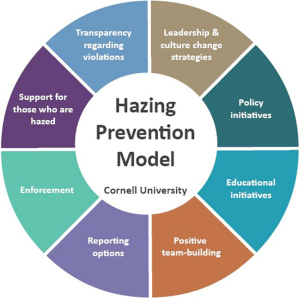
Student-Athlete Support, Development, and Inclusion Staff (in athletics): In conjunction with Sport Administrator and coaches, monitors completion of required training. Meets weekly with the Office of Student Conduct and Community Standards to review and manage post-incident sanction completion and behavior mitigation. In the event of team allegations, upon request, collaborate with Athletics Director or his or her designee (Sr. Deputy AD for Student-Athlete Experience), and sport administrator to determine next steps, sanctioning and adjudication process for team conduct.Athletics Compliance: In conjunction with coaching staff, monitors and tracks attestation completions in ARMS. Student Conduct and Community Standards: Investigates hazing reports, manages case resolution, and delivers and monitors sanction completion for individuals. Report Reports criminal behaviors to law enforcement. Skorton Center for Health Initiatives: Provides institutional leadership on hazing prevention strategies (e.g., Cornell's Hazing Prevention Model), delivers prevention focused educational trainings to students and employees on hazing, bystander intervention and how to recognize and respond to hazing, manages the University’s collaborates with SCL Communications team to curate the University hazing website (hazing.cornell.edu website), collaboratively implements communication strategies and campaigns about hazing prevention, conducts research on students’ knowledge, attitudes, and behaviors related to hazing among Cornell students, uses data driven-strategies to address hazing, and participates in public engagement and collaborative opportunities with national hazing prevention organizations and universities across the country to address hazing. The Skorton Center also collaborates with Athletics to provide educational trainings on hazing and bystander intervention education (e.g., Intervene, How to Recognize and Respond to Hazing) as requested. Student and Campus Life Communications: Coordinate with colleagues in the Skorton Center around timely and accurate communications (may include, but not limited to: website posts, community messaging) of hazing related incidents. Cornell Clery Compliance Office: Responsible for conducting annual training for all identified Campus Security Authorities and including the campus hazing policy statement and Clery reportable statistics of hazing in the Annual Security Report. |