Scope: Staff of the Library Technical Services, Preservation, and Resource Services departments regularly handle books that are damaged and deteriorated. This procedure describes the steps for adding or maintaining these items, identified either at the point of use, or on entering the acquisitions workflow in Olin LTS (as from a donation or order). Damaged/deteriorated books are those that have obvious damage to the binding (torn spine, loose boards, detached leaves, etc.). Books with intact hardcover bindings, are NOT covered by this procedure, whether or not the paper is brittle. Similarly, any items having the appearance or odor of mold should immediately be enclosed in a plastic bag, and be taken to directly to either the DBQ Supervisor or to the Book Repair supervisor, without proceeding through any of the steps below. These items should be isolated from other material and strictly assessed for inclusion into the collection, to prevent potential cross-contamination.
Contact: Pedro Arroyo
Unit: Acquisitions Services
Date last updated:
Date of next review: April 2026
Selector Referrals and Decisions
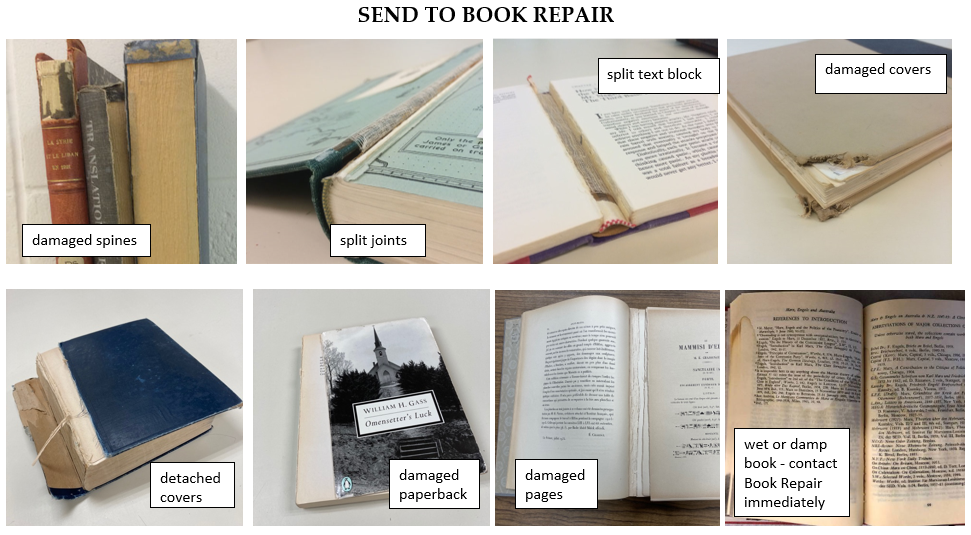
Examples of Items to send to Book Repair
Damaged books from the collection are sent to Book Repair by staff from all of the endowed libraries of the university (see section 4 below for examples). The Book Repair supervisor initially assesses the piece for possible transfer to RMC (based on year of publication and other factors). If referral to RMC is not necessary, the Book Repair supervisor makes one of the following decisions:
2. Selector Referrals and Decisions
When a cataloged, NON-digitized item in poor condition is sent to the selector, they will make a decision about its retention, taking into account the following factors (among others):
After considering these factors, the selector will notify the DBQ supervisor with one of the following decisions:
*Special Cases: while transferring single-part monographs to the Annex is the default, there are cases when the item will be enclosed and returned to the stacks instead. For example, if the fragile item is part of a large multi-volume set that has been digitized, and the rest of the volumes are not in fragile condition, it's preferable that they all stay together on a single Holdings, rather than A.) for a single volume to have a separate Annex holdings, while the others stayed on campus, or B.) to have to transfer the whole set to the Annex, based on the condition of a single volume.
When damaged or deteriorated materials enter the workflow as new acquisitions (e.g. donations, orders, or approvals, etc.), LTS staff should perform the following steps:
Below is a guide distributed to Resources Services staff, that helps identify damaged material that should be sent to Book Repair. If you see any damage that doesn't fit one of these examples, or if there is any doubt about whether the damage is significant enough, staff should send it to Book Repair anyway, and they will make the choice.