Date Created: April 12, 2024 Last Updated: April 17, 2024
Overview:
Cornell Catering generates revenue with internal and external customers for food and services and ensures revenue is recorded accurately in the financial statements for the month/period that the income is earned. In addition, customer receivables are tracked in the catering software to ensure timely payment for goods or services. Collection efforts are made by the Sales Managers, and any bad debts are processed for write off after three collection attempts have failed. Write offs must be approved according to the established SCL process.
Criticality: High | Frequency: Other | Turnaround: Other |
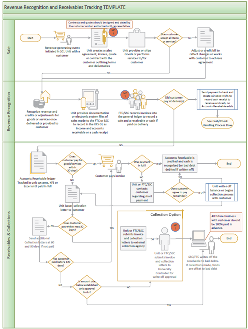
Customer: The customer or client is the party purchasing goods or services from the business. They initiate the transaction by requesting the products or services offered and are responsible for making payment according to the terms agreed upon in the contract or agreement. Unit Sales Staff: The unit staff are responsible for engaging with potential customers, negotiating contracts, and securing sales. They play a critical role in the revenue generation process by identifying opportunities and understanding customer needs. Unit staff may be involved in assessing the creditworthiness of customers, establishing credit limits, determining terms and deposit requirements, and monitoring customer payment behavior to minimize credit risk. Unit staff invoice the customer for the transaction and/or issue credit for returned items. Unit provides FTC with billing file to load to the general ledger if local systems are used. Financial Transaction Center (FTC): Responsible for the financial aspects of the transaction, including recording revenue billed in the General Ledger and tracking receivables and collections for external customers. The FTC follow’s up on overdue payments with reminder emails, phone calls and Teams chats to the catering team, and reconciles payments received with outstanding balances. |
|
|
|
|
Key Risks | Key Controls |
Billing Errors: Mistakes in invoicing, such as incorrect pricing, missing items, or inaccurate quantities, can lead to disputes with customers and delays in payment. Billing errors may result from manual data entry, changes made after contract signed, or inadequate review processes. | 1. Client signs a contract stating fees and terms. 2. Catering team provides the clients with a copy of the invoice prior to the event for review and asks for a signed copy to be returned after the client reviews the options and the costs. 3. FTC confirms the amount of the invoices matches the reports (Revenue Breakdown and Invoice Listing) in EventWorx. |
Regulatory Compliance: Failure to comply with regulatory requirements related to taxation, licensing, food safety, and health regulations can result in fines, penalties, or legal liabilities. | 1. Catering provides ongoing annual training (and upon hire) for staff to ensure these compliance regulations are followed and understood. 2. The sales team monitors liquor licenses to ensure permits stay current. 3. FTC processes all alcohol purchases quickly to ensure permits are not violated. 4. The FTC verifies taxes are assigned appropriately to external invoices. If sales tax is not applied and sales tax exemption is noted, the FTC contacts catering for verification. |
Data Security and Privacy: Handling sensitive customer information, such as payment details and personal data, exposes the university to risks of data breaches, identity theft, and PCI regulatory non-compliance. | 1. Catering ensures appropriate credit card handling procedures are followed to prevent risk of exposure to personal |
|
|
|
Cornell Catering Revenue & Receivables Process Flow Chart