*** This version of Confluence is for testing only and contains a copy of content from June 29th 2026. No changes will be preserved. ***

 user-65e78, last updated by user-2f66a on Sep 16, 2008
2 minute read
user-65e78, last updated by user-2f66a on Sep 16, 2008
2 minute read
We are still waiting to hear exact numbers on the flow rates. According to the engineer, the conduction line will be designed for 92.98 liters per second and they want the capacity to treat 100 liters per second (1585 gal/min). He says the current population is only 10,408 people but that with a 4.6% growth fact or over 20 years (compounding geometrically) they want to build for a future population of 26,764 people. With that many people, that would be 85 gal/person/day, way over the normal 35 gal/person/day. Even though the flowrate is so high, if they are building the conduction line for that much, the plant will need to be just as big.
So we need a design for a 1585 gal/min plant and preferably within the next week or so. That's 8 times bigger than Tamara and 3 times bigger than Marcala. Perhaps we could have two rows of sed tanks, one row on either side of the channel, to keep the plant from being too long. We look forward to hearing ideas from the Cornell Team.
The salary of the plant operator was raised
Up to date information on how the plant is operating can be found on the
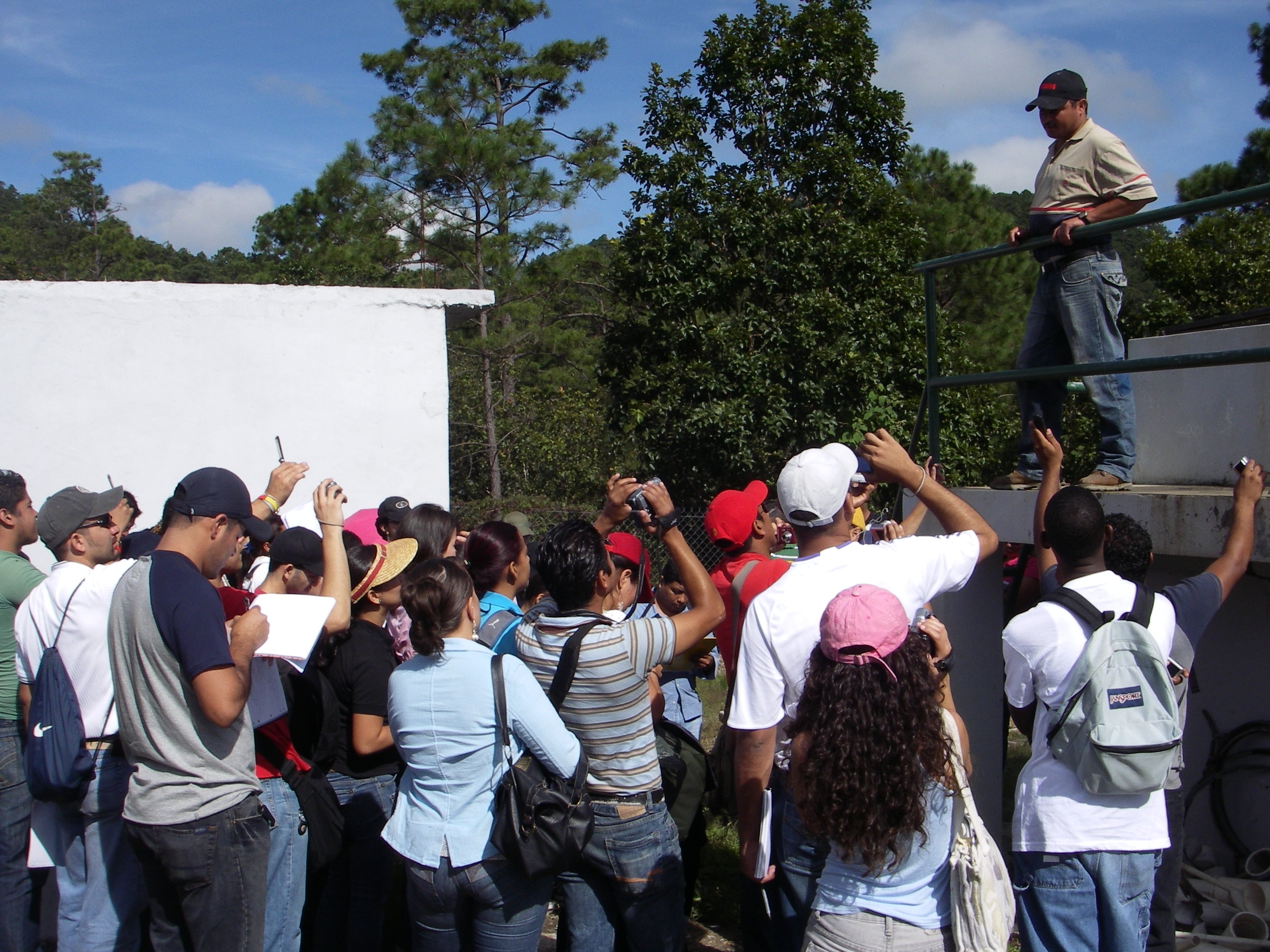
On Friday 9.12 students from the National Autonoma University in Tegucigalpa joined us in Ojojona after meeting their professor at the RASHON presentation on 9.5.08.
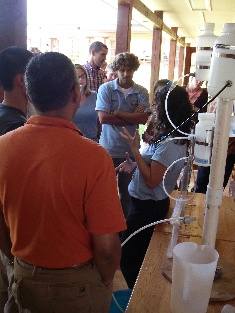
On Thursday 9.11 we presented to the water and sanitation volunteers working with the Peace Corps in Honduras at their annual 'Reconnect' meeting. It was a great way to find potential partners in other communities. It would be great to have a plant in a community where a Peace Corps volunteer was stationed. A potential site might be San Francisco del Valle, Ocotepeque, where APP has already been working.