*** This version of Confluence is for testing only and contains a copy of content from June 29th 2026. No changes will be preserved. ***

 user-5be22, last updated on Dec 06, 2012
2 minute read
user-5be22, last updated on Dec 06, 2012
2 minute read
A floc breakup procedure was devised according to the calculations of energy dissipation rate, capture velocity, collision time. Six hose clamps were evenly placed onto tube flocculator (2 on each unit, see figure 1). The inner diameter of clamps are calculated based on the maximum energy dissipation rate. After the floc breakup device were set up, the flocculator were cleaned using a tiny sponge to remove the clay that sticked to the walls of flocculator. Then a complete experiment with the same method as the control experiment was conducted. 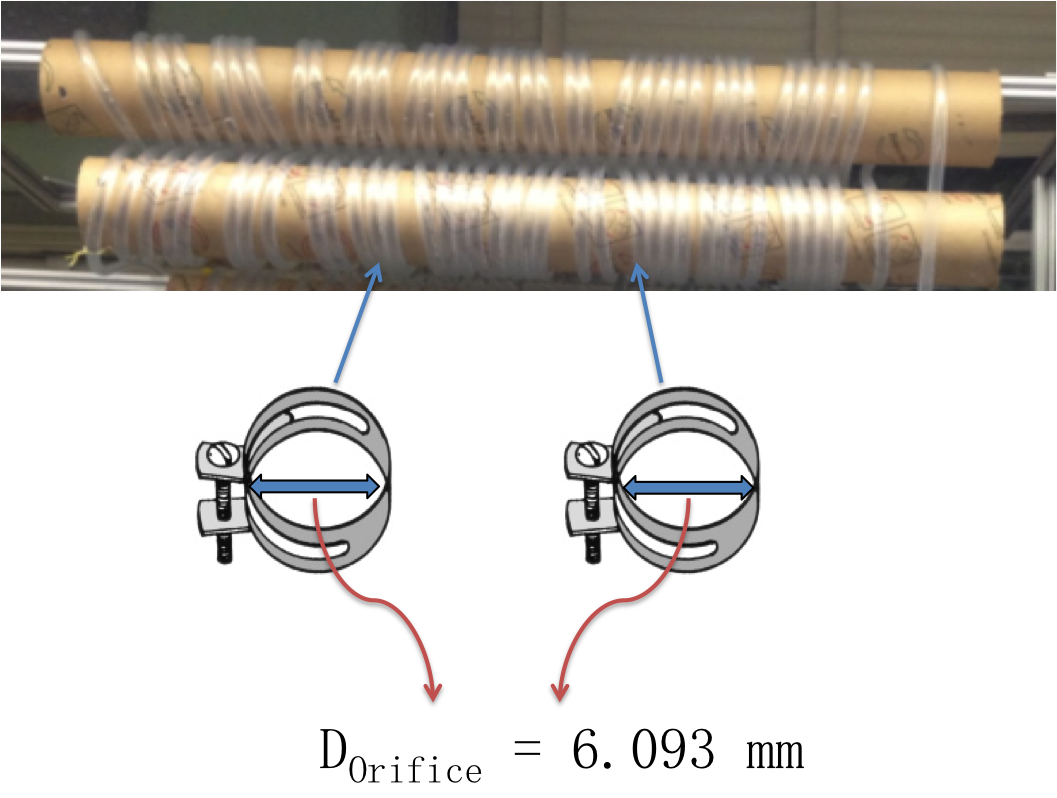
Figure 1 Floc breakup installation
Figure 2 demonstrates the compared results of residual turbidity with floc breakup and without floc breakup. Obviously, the residual turbidity are lower when breaking the flocs using clamps. At the alum dose 4, 4.6 and 5.2 mg/L, the difference of residual turbidity curve reaches 10 NTU. Both curve seems to fit into the logarithmic trend line -- the one with floc breakup matches the trend line even with a correlation coefficient of 0.9934. These 2 trend lines verify the predictive model in Chapter 1. The results not only proves that our hypothesis "large flocs are useless" is right but also offers us insight into improving AguaClara's current flocculator design. 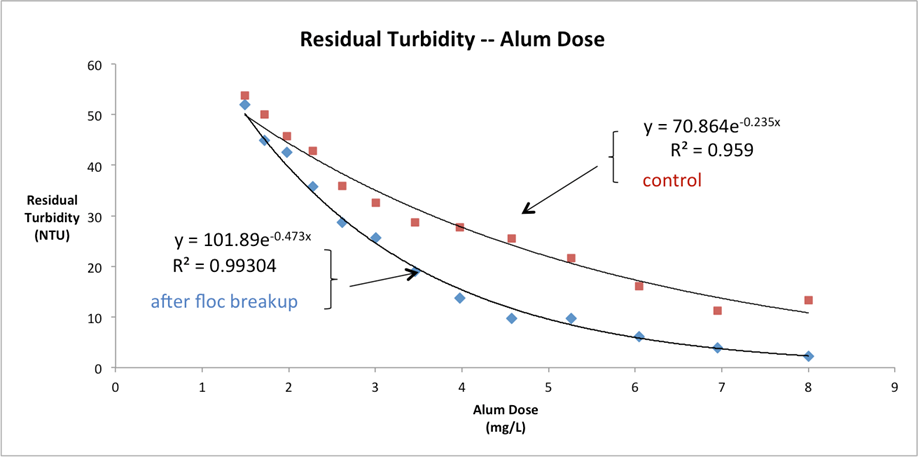
Figure 2 Comparative results of residual turbidity vs. alum dose