*** This version of Confluence is for testing only and contains a copy of content from June 29th 2026. No changes will be preserved. ***

...
The ANC experimental setup consists consisted of the water source, a peristaltic pump, the limefeeder, and a pH probe. The water source is was either tap water or distilled water, depending on the experiment. Distilled water has a much lower concentration of carbonates compared to tap water and is used to simulate water conditions in Honduras. It can be found in the hydraulics laboratory.
The peristaltic pump is was run by Process Controller. The file can be found here <put file here>in the Process Controller Method. The tube size is was 18 and flow rate can could be changed. In the first type of setup (as seen below in Fig 1), the limefeeder is was just a vertical column. In the second setup (as seen in Fig 2), the limefeeder is was a vertical column attached to a tube with a 22.5 degree angle with respect to the vertical axis. The pH probe measures measured the pH of the effluent and is was calibrated with buffers of pH 4, 7, and 10. The file to set up the probe can be found here <put file here>.in the pH probe file.
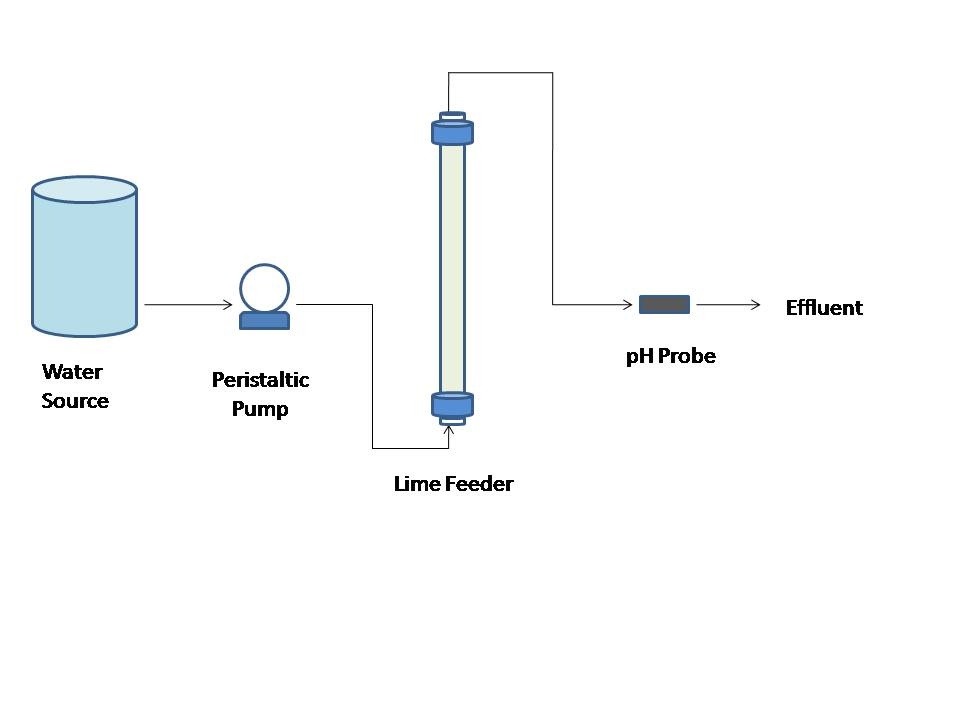
| Wiki Markup |
|---|
{float:left}* Figure 1. Type I Setup. Limefeeder was a vertical column.{float} |
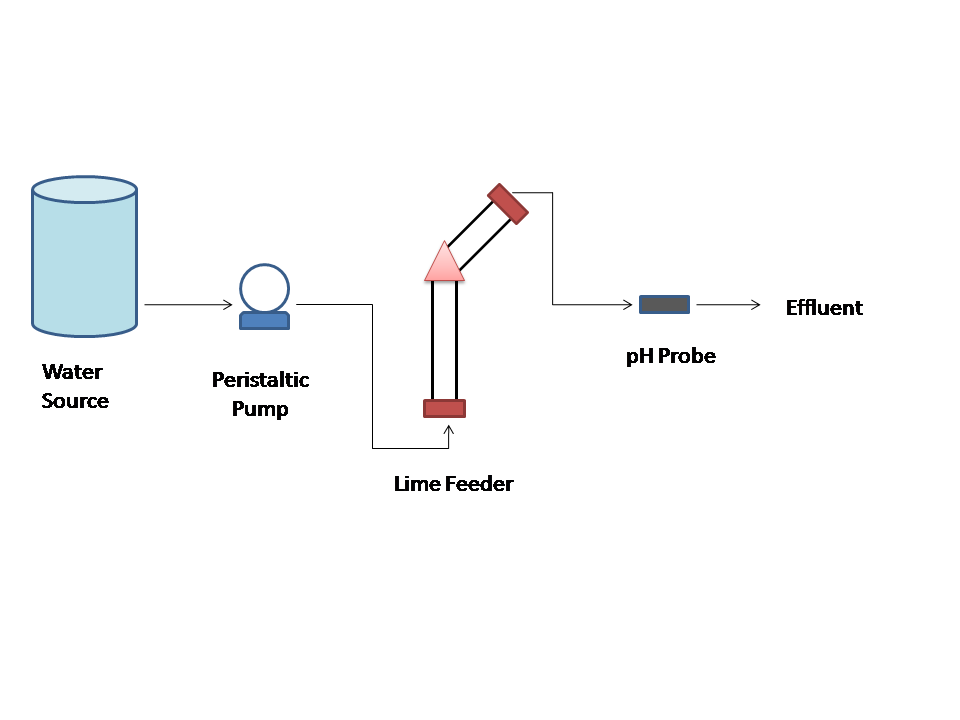
| Wiki Markup |
|---|
{float:left}* Figure 2. Type II Setup. Limefeeder was a combined vertical and angled tube.{float} |
There were two types of hydrated lime used in these experiments. The first type is Hi-Yield Hydrated Lime. The second is <Enter name of lime here>. 100 grams of lime is was high purity hydrated lime, containing 96% calcium hydroxide. The second had only 70% calcium hydroxide. Lime was measured on the scale and then is introduced from the top of the limefeeder either in powder form or in a lime slurry (lime mixed with water) for the second type of setup. After the lime is was in the column, Process Controller turns turned the peristaltic pump on, starting the experiment.
After the experiment is was done, there is would be an abundance of calcium carbonate settled on the bottom of the lime feeder. To clean the column, the top is was uncapped, water is was sloshed around, and then emptied. Acid may be needed to clean the column for calcium carbonate residue.