...
- historical data - history tables are created as data are updated so the LDP or Metadb database retains data that was updated in the past, which can be used for trend reporting
- transformed data - FOLIO stores data in 3 different formats (JSON, ERM, MARC JSON mapped), all of which get transformed into relational data tables as part of the LDP/Metadb ETL (extract, transform, load) process, making it possible make joins and queries across those heterogeneous native data sources
- derived tables - the FOLIO reporting community writes derived table queries that transform the denormalized FOLIO data into joined tables with data arrays broken into columns to both improve query performance and simplify query creation
- external data sets - institutions can import their own data into the LDP or Metadb database, which Cornell has done in bringing select data tables from its legacy Voyager ILS into its LDP and Metadb reporting databasedatabases
- user-defined data sets - data analysts can use LDP and Metadb to create their own data tables to be used in queries, which the Cornell Library reporting team has done for queries in areas with large data sets (e.g., annual statistics)
...
- Having access to MARC data is essential for Cornell Library reporting users. The marct tool currently converts SRS/MARC records from JSON to a tabular format for LDP and Metadb.
- The Reporting app provides a FOLIO interface for interacting with an LDP or Metadb database. The Query builder in the Reporting app allows you to build a simple query without using SQL with the option to save it for later use.
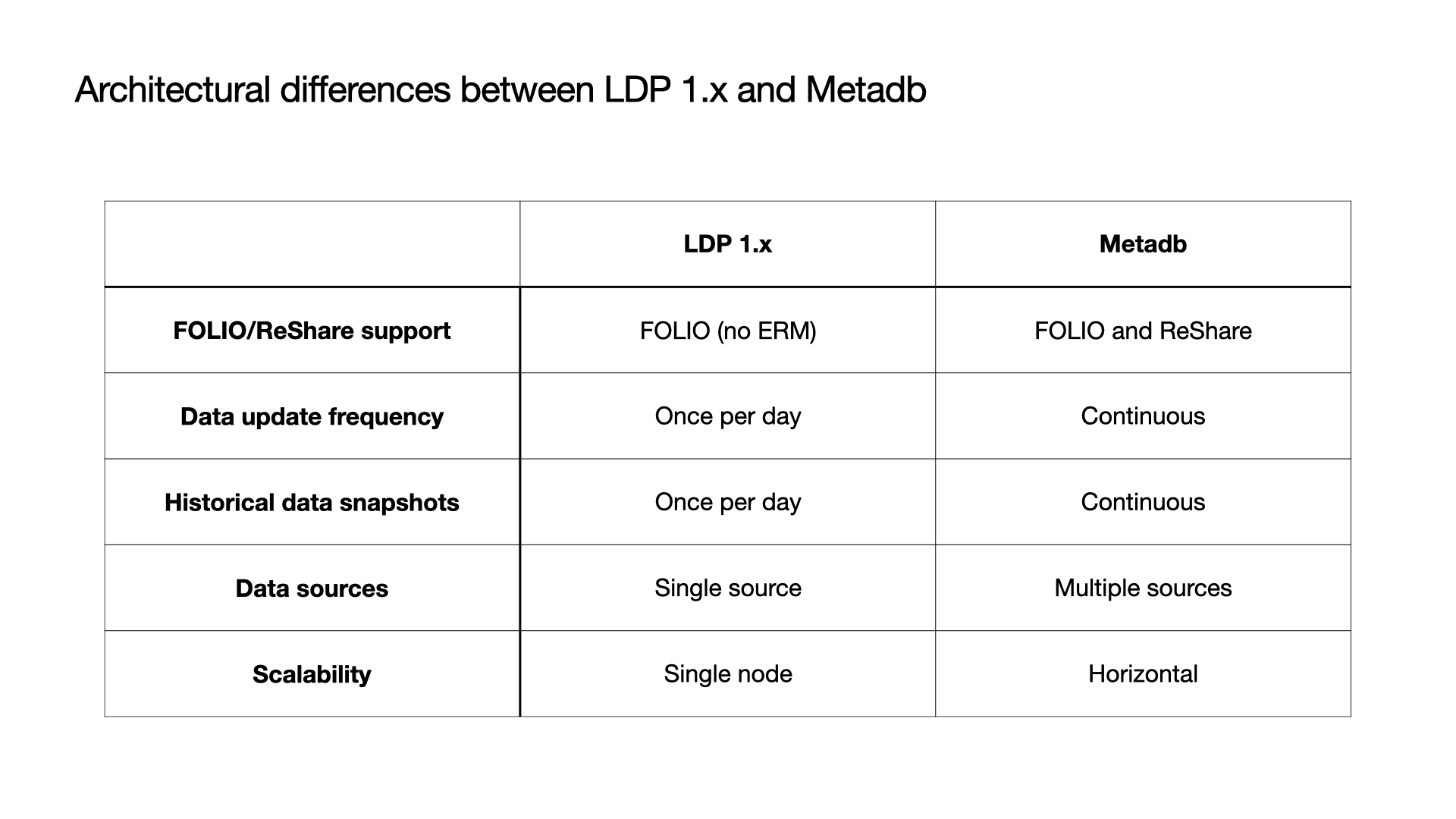
(Image provided by Nassib Nassar, Index Data)
Resources
...
