*** This version of Confluence is for testing only and contains a copy of content from June 29th 2026. No changes will be preserved. ***

Biography
I am a first-year PhD student in chemical engineering at Cornell University. I grew up in central New Jersey and became interested in science in high school after taking required math and basic science courses. I studied biophysics as an undergraduate at the University of Southern California, and had the chance to carry out computational research in condensed matter physics. My desire to do more practical research led me to study synthetic bistable genetic circuits in E. coli cells at the University of Michigan. This work eventually led to a master's master’s degree (also in biophysics). While at Michigan, I taught and tutored students in introductory college chemistry. This experience got me interested in science education.
I am currently researching the basic chemistry and physics of cell membranes in Professor Susan Daniel's Daniel’s lab. Phospholipids are a major component of cell plasma membranes. These molecules have a polar head group attached to multiple nonpolar tails. Because of this unique structure, phospholipids self-organize into bilayers in water to protect the nonpolar tails from water. Real cell membranes have a complex milieu of proteins, lipids, and other molecules embedded in this bilayer. This and other factors make it difficult to study plasma membranes in cells. Instead of doing this, I make artificial supported lipid bilayers and use fluorescence microscopy to probe the properties of these bilayers. I am specifically trying to examine the effect of various types of confinement on the diffusion of membrane proteins.
...
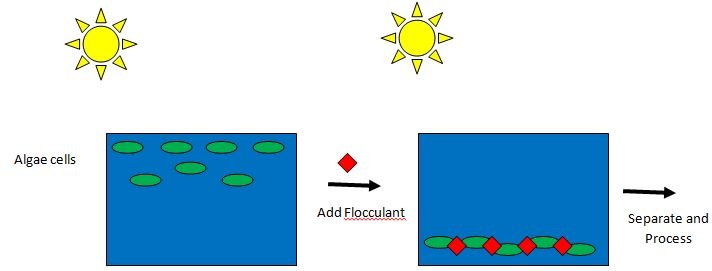
There are numerous possible flocculants, including viral proteins such as hemagglutinin. We are investigating the effect of flocculant concentration and growth conditions, including salt concentration, on flocculation rates. We are also investigating the effect of these flocculants on cell membrane properties such as stiffness and viscosity. These properties could potentially be important in processing the algal cells to separate the hydrocarbon chains of bilayer lipids from their polar head groups. Through this research, we hope to find ways to process algae for biodiesel production that are effective and cheap enough to make algae a viable alternative to fossil fuels.