*** This version of Confluence is for testing only and contains a copy of content from June 29th 2026. No changes will be preserved. ***

Field Definitions:
Wiki Markup
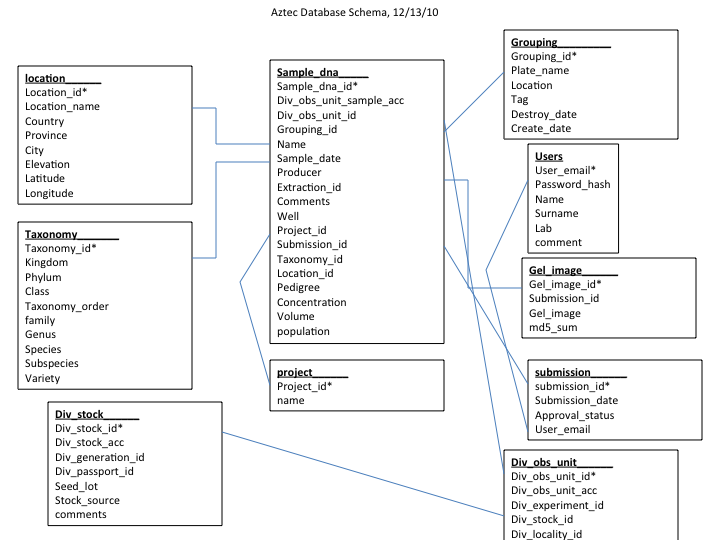
Stock Number If your sample was drawn from a stock population, this field should uniquely identify that population. For example, samples extracted from seed should be accompanied by their seed lot number, if known. Only alphanumeric characters, dots, hyphens, and underscores are allowed. Maximum 255 characters.
Source Lab The name of the laboratory from which the samples were submitted. For example, Buckler Laboratory or New York State Agricultural Experiment Station. Only alphanumeric characters, dots, hyphens, and underscores are allowed. Maximum 255 characters.
Pedigree A name, number or code that represents the pedigree of the sample. For example, [CML445/CML176]. Any ASCII character is allowed.
Kingdom The biological kingdom of the sample. For example, Plantae for the species Zea mays subsp. mays var. japonica. Only letters, dots and hyphens are allowed.
Phylum The phylum of the sample. Only letters, dots and hyphens are allowed.
Class The taxonomic class of the sample. Only letters, dots and hyphens are allowed.
Order The taxonomic order of the sample. Only letters, dots and hyphens are allowed.
Family The taxonomic family of the sample. For example, Zea for the species Zea mays subsp. mays var. japonica. Only letters, dots and hyphens are allowed.
Genus The genus name of the sample. For example, Zea for the species Zea mays subsp. mays var. japonica. Only letters, dots and hyphens are allowed.
Species The species name of the sample. For example, mays for the species Zea mays subsp. mays var. japonica. Only letters, dots and hyphens are allowed.
Subspecies The subspecies name of the sample. For example, mays for the species Zea mays subsp. mays var. japonica. Only letters, dots and hyphens are allowed.
Variety The variety name of the sample. For example, japonica for the species Zea mays subsp. mays var. japonica. Only letters, dots and hyphens are allowed.
Population The name of a specific population from which your sample was drawn. For example, 2010 increase ears. Only letters, numbers, dots, hyphens and underscores are allowed. Maximum 255 characters.
Common Name The common name of the sample organism. For example, Silver Queen.
Concentration The concentration of DNA in the sample, in nanograms per microliter. For example, .66 for 100 nanograms of DNA in 150 microliters of liquid. Only numbers and an optional decimal point are allowed.
Volume The volume of liquid in your sample, in microliters. For example, 150 for a microplate well three-quarters full. Only numbers and an optional decimal point are allowed.
Well The microplate well that contains the sample. This should be a letter from A-P, followed by a number from 1-24. For example, B9.
Preparer The name of the researcher or staff member that prepared the samples. For example, if a plate is prepared by technician Tim Nguyen as part of research by postdoc Adam Black, the preparer's name is Tim Nguyen. Only letters, dots and hyphens are allowed.
Plate Name A name, number or code that uniquely identifies the plate containing the sample, if one exists. This may be either a serial number supplied by the manufacturer, or a plate number assigned by the researcher. Only alphanumeric characters, dots, hyphens, or underscores are allowed. Maximum 50 characters.
Project Name A name assigned by the researcher that identifies the research project or experiment for which this plate was used. Only letters, numbers, dots, hyphens or underscores are allowed. Maximum 255 characters.
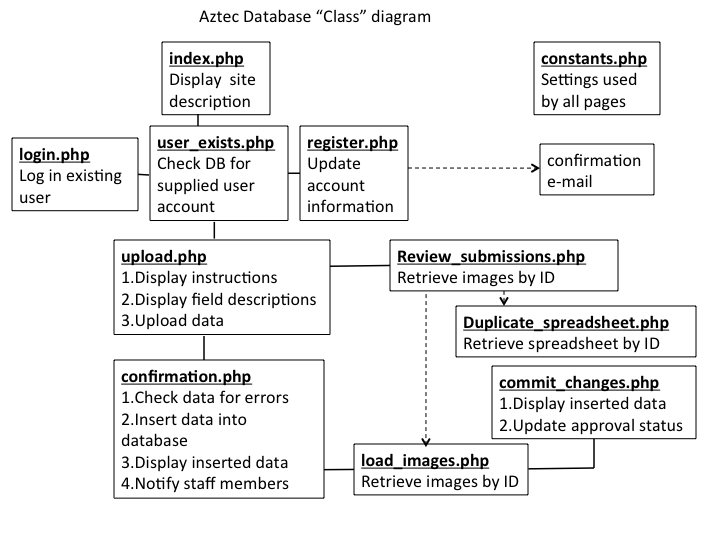
Gel Image Samples should be gel filtered, and an image of the gel included with each submission. This allows us to judge the quality of your sample DNA and library prep. Gel images are uploaded simultaneously with sample data through the form on this page.
Location Name The common name of the specific location from which the sample was obtained. For example, Field B7. Only letters, numbers, dots, hyphens or underscores are allowed.
Country The ISO three-letter code for the country from which the sample was obtained. For example usa for the United States of America.
State or Province The largest sub-national province from which the sample was obtained. For example, New York. Only letters, dots and hyphens allowed.
City The name of the city or town from which the sample was obtained. For example, Aurora. Only letters, dots and hyphens allowed.
Elevation The elevation at which the sample was obtained, in meters above sea level. Only numbers allowed, with an optional decimal point and sign (+/-).
Latitude The latitude at which the sample was obtained, in degrees. North latitude is positive; South latitude is negative. For example, 42.753961 specifies 42.753961 degrees North latitude. Only numbers allowed, with an optional decimal point and sign (+/-).
Longitude The longitude at which the sample was obtained, in degrees. West longitude is negative; East longitude is positive. For example, -76.70245 specifies 76.70245 degrees west longitude. Only numbers allowed, with an optional decimal point and sign (+/-).
Home Page Text
Institute for Genomic Diversity DNA Sample Tracking Database
...
