*** This version of Confluence is for testing only and contains a copy of content from June 29th 2026. No changes will be preserved. ***

Date Created: February 2, 2024 Last Updated: May 30, 2024
Overview:
Over 1,000 Registered Student Organizations recognized by Cornell University are educated about hazing prevention education and the 73,000 student members (many students are members of multiple groups) in over 1,000 organizations are held accountable for their hazing related behaviors. Organization leadership is required to familiarize with the Big Red Guidebook and register their organization annually. Members of all organizations are invited to self-enroll in the Skorton Center’s online training: How to Recognize and Respond to Hazing and are highly encouraged to attend National Hazing Prevention Week activities organized by Sorority and Fraternity Life. Prevention education and opportunities for involvement are geared towards safety and community standards expected of all campus individuals and groups. Trainings provide education around the disciplinary process should there be an active investigation following a hazing report and the consequences for not complying with mandated sanctions set by the Student Code of Conduct, National Organization Headquarters and/or their Cornell recognized organization. The Office of Student Conduct and Community Standards, in collaboration with Campus and Community Engagement, manages appropriate follow up for non-compliance.
Criticality: High | Frequency: Other | Turnaround: Other |
| Expand | ||
|---|---|---|
| ||
Campus and Community Engagement; Campus Activities Staff: Responsible for offering training resources and coordinating logistics with the organization’s leadership team to provide training. Monitors and oversees completion statuses in Campus Groups. Sets and monitors expectations for advisors and organization leadership. Meets with the Office of Student Conduct and Community Standards to review and manage post-incident sanction completion and behavior mitigation. Provides resource information to organizations and individual members in need of support. Advisors: Responsible for setting expectations and monitors around organization and individual behavior. Submit referrals via the University’s Hazing website (www.hazing.cornell.edu) and/or to Student Conduct and Community Standards. Student Conduct and Community Standards: Investigates hazing reports and manages hearings then delivers and monitors sanction completion. Notifies National Organization Headquarters, as needed. Reports criminal behaviors to law enforcement. Skorton Center for Health Initiatives: Provides institutional leadership on hazing prevention strategies (e.g., Cornell's Hazing Prevention Model), delivers prevention focused educational trainings to students and employees on hazing, bystander intervention and how to recognize and respond to hazing , manages the University’s hazing.cornell.edu website, collaboratively implements communication strategies and campaigns about hazing prevention, conducts research on students’ knowledge, attitudes, and behaviors related to hazing among Cornell students, uses data driven-strategies to address hazing, and participates in public engagement and collaborative opportunities with national hazing prevention organizations and universities across the country to address hazing. The Skorton Center also collaborates with the Office of Sorority and Fraternity Life to provide educational trainings on hazing and bystander intervention education (e.g., Intervene, How to Recognize and Respond to Hazing). |
| Expand | ||
|---|---|---|
| ||
|
| Expand | ||
|---|---|---|
| ||
|
| Expand | ||
|---|---|---|
| ||
|
| Expand | ||
|---|---|---|
| ||
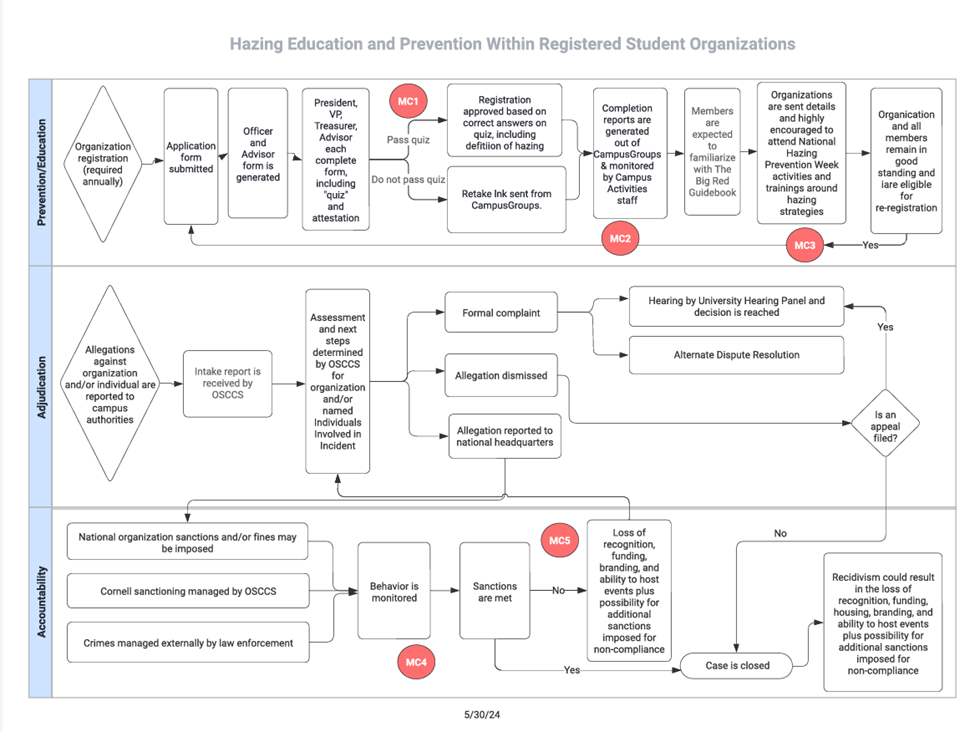
Education/Prevention: 1. Officers submits Officer and Advisor form. 2. Officer and Advisor form is generated. 3. President, VP, Treasurer, Advisor each complete form, including "quiz" and attestation. 4. Completion reports are generated out of CampusGroups & monitored by Campus Activities staff. 5. Members are expected to familiarize with The Big Red Guidebook, which includes information and resources related to hazing. 6. Organizations are sent details and highly encouraged to attend National Hazing Prevention Week activities held annually in September (organized by Sorority and Fraternity Life). 7. Organization Leadership, Advisors, and Campus Activities Staff members monitor organizational and individual behavior and provide resources as needed. 8. Allegations against group, team, organization and/or individual are reported to campus authorities. 9. OSCCS provides data analytics with Student Activities Adjudication: 1. Intake report is received by OSCCS. 2. Assessment and next steps determined by OSCCS and Involved Parties. 3. When warranted, incident is reported to National Organization Headquarters to be handled externally concurrently with campus and/or legal sanctioning. 4. Incident is resolved through formal complaint, alternate dispute resolution or dismissed. 5. OSCCS provides written description of incident outcome to Skorton Center, who posts the summary to https://hazing.cornell.edu/violations 6. Criminal behavior is reported to law enforcement for external proceedings, concurrently with campus sanctioning. Accountability:
|
| Expand | ||||||||||||
|---|---|---|---|---|---|---|---|---|---|---|---|---|
| ||||||||||||
|
| Expand | ||
|---|---|---|
| ||
|
| Expand | ||
|---|---|---|
| ||
|
| Expand | ||
|---|---|---|
| ||
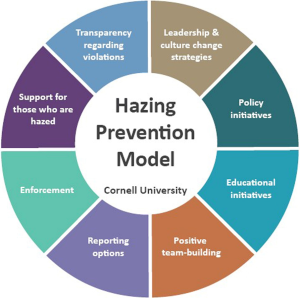
Between 2001 and 2015, Cornell University developed a comprehensive (i.e. multi-component) public health hazing prevention model that addresses individuals, organizations, and the broader environment. This model includes eight elements: leadership and culture change strategies; policy initiatives; educational initiatives; positive team-building; reporting options; enforcement; support for victims; and transparency regarding violations. For more information visit www.hazing.cornell.edu |
| Expand | ||
|---|---|---|
| ||
|
| Expand | ||
|---|---|---|
| ||
|
| Expand | ||
|---|---|---|
| ||
|
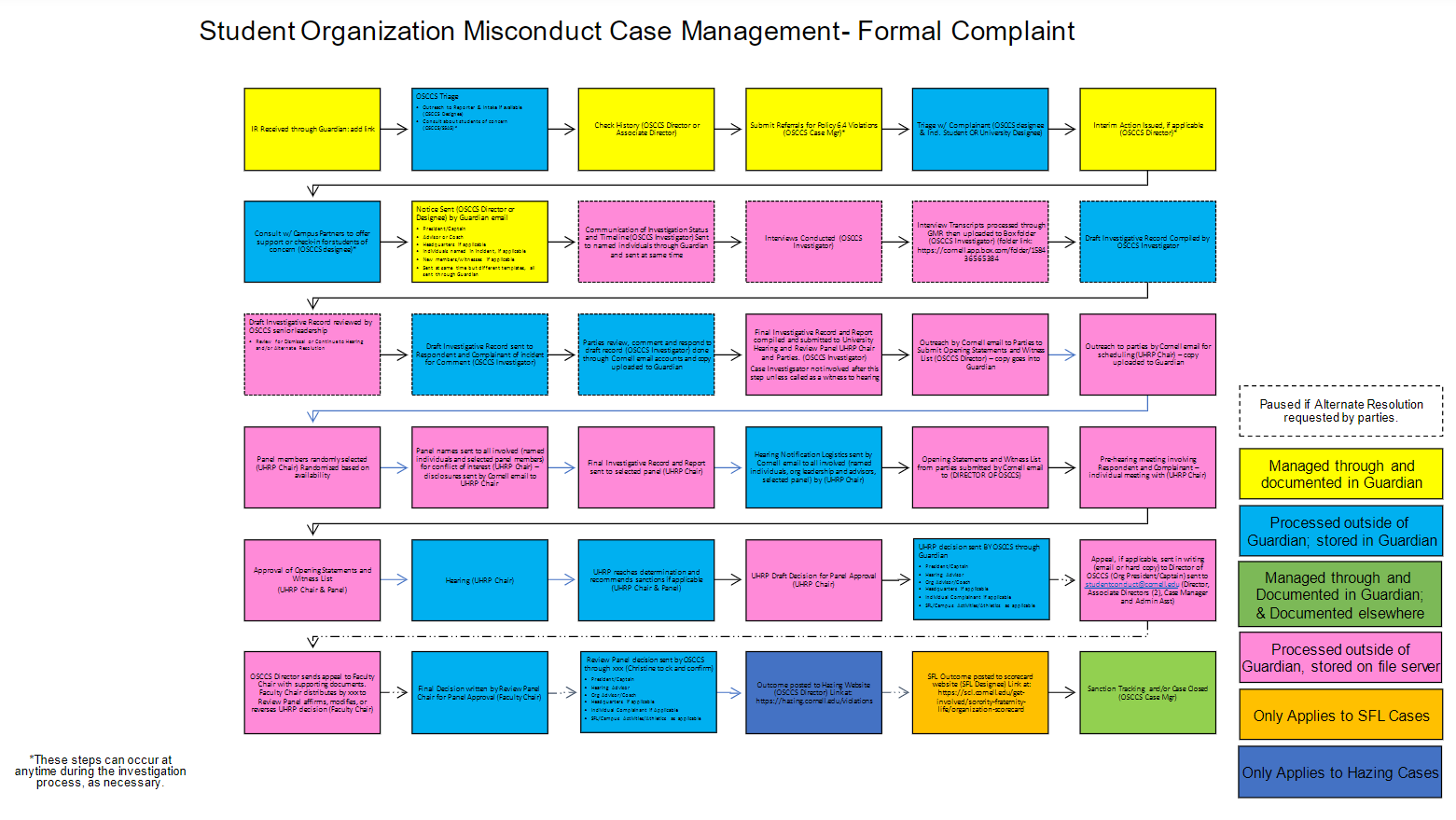
Misconduct Case Management - Alternate Resolution for Formal Complaint
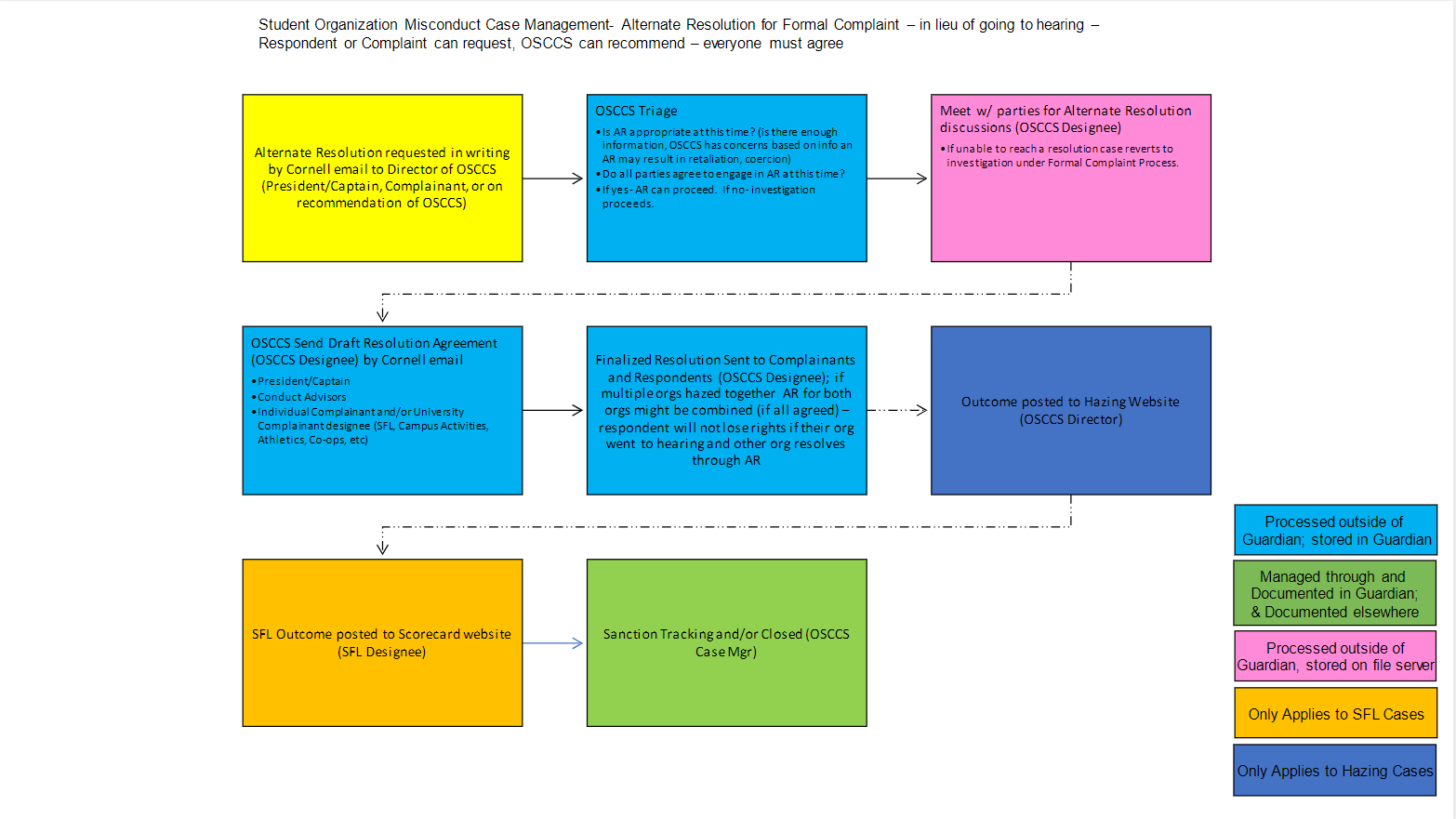
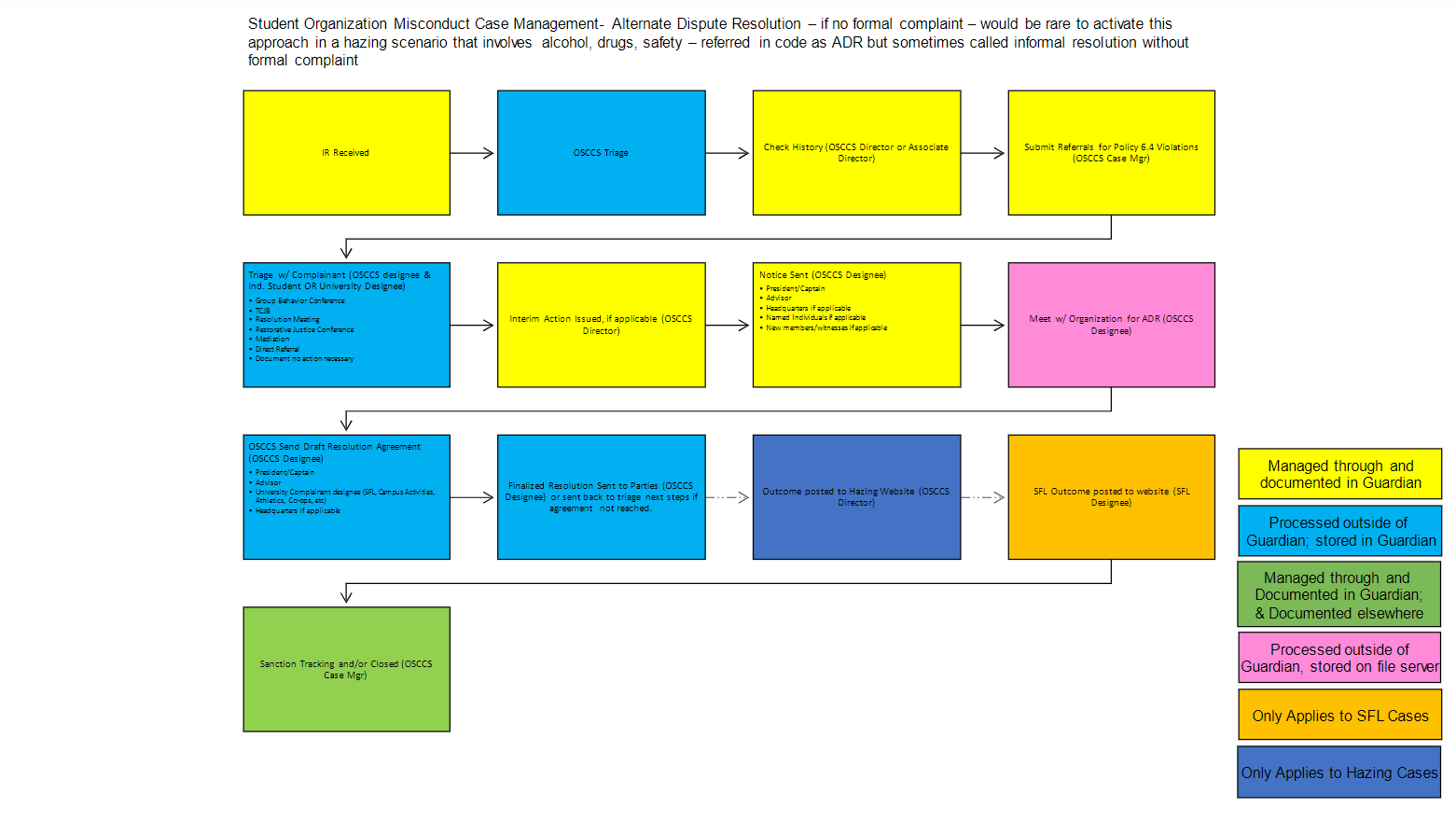
Misconduct Case Management - Alternate Dispute Resolution if no Formal Complaint