*** This version of Confluence is for testing only and contains a copy of content from June 29th 2026. No changes will be preserved. ***

...
This investment fund will use a diversified strategy and focuses on two market sectors: contemporary photography and emerging new media art. A focus on political issues is the underlying characteristic that will tie the two sectors together. This focus intends to add insurance to the value of the works through their cultural and historical significance.
Wiki Markup
This summary projects that investments will be made until year four, and divestments will be made from years three to ten. These fund will target about $75m or 75% in institutional investments, creating complex financial ties not possible solely with individual investors. For financial security, any purchase greater than 10% of the funds commitments will be subject to approval by the Fund Board. The fund will be registered in the British Virgin Islands to avoid capital gains taxes. The difference saved will be reinvested toward future purchases.
...
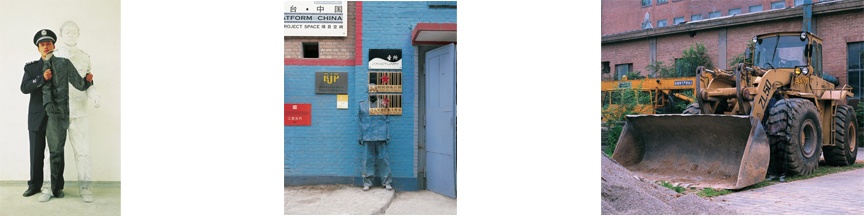
Hiding in the City, by contemporary Chinese artist, Liu Bolin, is an example of the fund's photography investments. For this series, Bolin takes photographs of himself camouflaged to blend in with urban landscapes.
| Wiki Markup |
|---|
!Invisible Man Series copy.jpg|border=1!
\[1\] |
| Wiki Markup |
|---|
He intends for his works to show the effects of the city on the people living in them. The works have a strong political agenda. He states, "I experienced the dark side of society, without social relations, and had a feeling that no one cared about me. I felt myself unnecessary in this world. From that time, my attitude turned from dependence into revolting against the system." \[2\]. He also uses his work to protest against artistic persecution. He continues, "...contemporary art was in quick development in Beijing, but the government decided it did not want artists like us to gather and live together. Also many exhibitions were forced to close." \[2\]. |
| Wiki Markup |
|---|
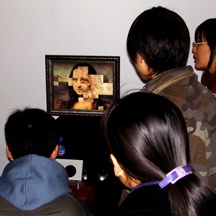
_Mona Lisa Meta-data_ is an example of the new media art that the fund would focus on. The piece was shown at the Second Annual International Art and Science Exhibition and Symposium in Beijing. Users can alter the iconic image by using newly developed optical tracking technology, in which that stated purpose is to "offer one possibility for an even more transparent interface" \[3\]. But the work also brings into focus larger political issues, such as the dominance of the West and globalization \[3\]. |
[1]
He intends for his works to show the effects of the city on the people living in them. The works have a strong political agenda. He states, “I experienced the dark side of society, without social relations, and had a feeling that no one cared about me. I felt myself unnecessary in this world. From that time, my attitude turned from dependence into revolting against the system.” [2]. He also uses his work to protest against artistic persecution. He continues, “...contemporary art was in quick development in Beijing, but the government decided it did not want artists like us to gather and live together. Also many exhibitions were forced to close.” [2].
Mona Lisa Meta-data is an example of the new media art that the fund would focus on. The piece was shown at the Second Annual International Art and Science Exhibition and Symposium in Beijing. Users can alter the iconic image by using newly developed optical tracking technology, in which that stated purpose is to “offer one possibility for an even more transparent interface” [3]. But the work also brings into focus larger political issues, such as the dominance of the West and globalization [3].
[3Wiki Markup
Thus, it is works like these that the fund will focus on due to the added value of their social and historical commentaries. While the new media art category is less defined and more volatile, the Art Politico Fund will try to capitalize off its emergent status, as another chapter in the history of artistic development.
Sources:unmigrated-wiki-markup
\[1\] [http://v1kram.posterous.com/liu-bolinthe-invisible-man|http://v1kram.posterous.com/liu-bolinthe-invisible-man]unmigrated-wiki-markup
\[2\] [http://www.dailymail.co.uk/news/article-1201398/Liu-Bolin-The-Chinese-artist-turns-Invisible-Man.html|http://www.dailymail.co.uk/news/article-1201398/Liu-Bolin-The-Chinese-artist-turns-Invisible-Man.html]unmigrated-wiki-markup
\[3\] [http://magazine.art-signal.com/en/one-cache-memory-of-new-media-in-china/|http://magazine.art-signal.com/en/one-cache-memory-of-new-media-in-china/]unmigrated-wiki-markup
\[4\] [Tosca Photography 2011 fund review.pdf\|download/attachments/163686826/Tosca+Photography+2011+fund+review.pdf?version=1&modificationDate=1306441739000|]Wiki Markup
[5\] [ARTH 4696 FINLEY Art Investment Funds HOROWITZ.pdf\|download/attachments/163686826/ARTH+4696+FINLEY+Art+Investment+Funds+HOROWITZ.pdf?version=1&modificationDate=1306441610000|]Wiki Markup
[6\] [Tosca Photography 2011 fund review.pdf\|download/attachments/163686826/Tosca+Photography+2011+fund+review.pdf?version=1&modificationDate=1306441739000|]
