*** This version of Confluence is for testing only and contains a copy of content from June 29th 2026. No changes will be preserved. ***

...
| Panel |
|---|
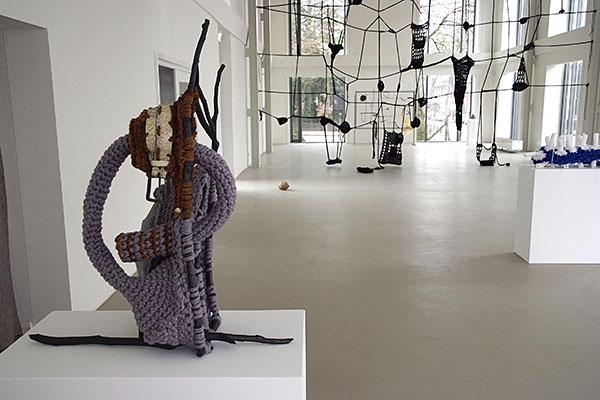
McKenzie Sullivan The Art Basel in Miami Beach is one of the most prestigious art shows in the world. More than 260 leading galleries from North America, Europe, Latin America, Asia and Africa take part, showcasing contemporary artworks by more than 2,000 artists. Every year a greater number of art collectors, artists, dealers, curators, critics and art enthusiasts from around the world participate in the Art Basel Miami Beach. The exhibiting galleries are among the world's most respected art dealers, offering exceptional pieces by both renowned artists and cutting-edge newcomers. Special exhibition sections feature young galleries, performance art, public art projects and video art. One example of how the Art Basel show stimulates the art market is easily visible directly in Miami itself. Since Art Basel's debut in 2002 dozens of new galleries have opened in the city and many artists have relocated to Miami, lured by the relatively low rents as well as by Art Basel itself. The fair not only gives artists, collectors and gallery owners a rare opportunity to see world-class art but to hobnob with the leading players in the international art world. The show provides enormous opportunities for less prominent art collectors and smaller galleries to join in the world art stage without being relegated to the large auction houses. Not only does the show stimulate the art market by providing a significant outlet for art collectors to buy and sell but the Fair also stimulates the primary economy in the city. Jason Loeb, Chairman of the Miami Beach Chamber of Commerce says, "We understand the value of Art Basel because cultural impact has a direct economic impact. Art Basel has taken Miami Beach from a resort and tourism destination to a destination for art and culture - which means big business for the City. The 5-day event is bringing international visitors, with a huge number from Latin America, into the city filling hotels to capacity while shopping and eating at our world-renowned restaurants. The estimated $500 million in impact is leading Miami Beach from recession to resurgence" (Gerrity). Sorting through all the quality-driven exhibitors I was particularly drawn to Alexandra Birchen, an artist in the Art Positions' sector of the show, located in the Miami Beach Convention Center. It is a platform designed specifically for a single major project from one of Art Basel's participating artists. The platform allows curators, critics and collectors to discover remarkable new talents in a venue decide to promote and market the best of the best around the world. Bircken is represented and curated by the Kimmerich Gallery from New York City. Birchen is an artist with a unique sculptural language – working with assemblages of rope, thread or nylon stretched, suspended or draped over wood, iron and steel. Although New York City provides a booming location for the art market, as curators of Bircken's most recent work, Kimmerich Gallery also finds enormous benefit through its exposure to an international audience in Miami as well as from the prestige that a talent like Birchen brings to their profile in this particular venue. Organic materials such as twigs, steel, rope, mortar, and leather are Alexandra Bircken's materials of choice. She uses predominantly earth-tone colors that draw attention to her sculptures' organic forms and holistic qualities. Birchen also creates installations featuring primitive materials like wood, knitted fragments and twigs. Her work has strong references to traditional craft practices and to the natural world, from which she sources her materials. The uniquely environmental aspect of her creations is instantly attractive to many collectors whose own holistic and trendy lifestyles are reflected in her works. Click below for some interesting links to Alexandra Bircken's works and an interview with her discussing what inspires her to create and how she finds her materials. http://www.youtube.com/watch?v=DyF7SXwaBZ4 http://www.saatchi-gallery.co.uk/artists/artpages/alexandra_bircken_unit4_fusion.html "Art Positions." Art | Basel | Miami Beach. Web. 05 Jan. 2012. <http://www.artbaselmiamibeach.com/go/id/dit/> "Alexandra Bircken." KIMMERICH. Web. 05 Jan. 2012. <http://kimmerich.com/html/artists/alexandra-bircken/press.html> Gerrity, Michael. "Art Basel Miami Beach Becomes $500 Million Economic Stimulus Package for Local Economy." World Property Channel. 2 Dec. 2011. Web. 05 Jan. 2012. Maneker, Marion. "Art Basel Miami Beach: Good or Bad?" Art Market Monitor. 30 Nov. 2011. Web. 5 Jan. 2012. <http://artmarketmonitor.com/2011/11/30/artbasel-miami-beach-good-or-bad/> |
| Panel |
|---|
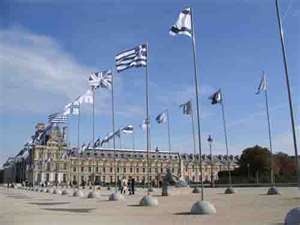
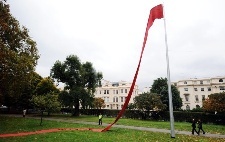
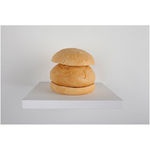
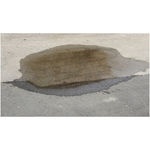
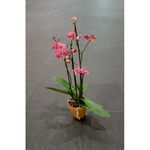
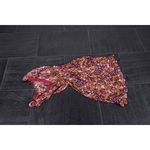
Elena Cestero The famous Art Basel international contemporary art fair began in Basel, Switzerland in 1970 founded by gallerists Balz Hilt, Trudy Bruckner, and Ernest Beyeler. The event brings together art, artists, galleries, and dealers from around the world and quickly became the largest such show in the world. Art Basel Miami Beach, which celebrated its 10th anniversary this year, is fast gaining attention that may even surpass that of the Switzerland show. It is clear that the popularity of the Art Basel Miami Beach event has rapidly increased as more than 60,000 people now attend, many of whom are elites and celebrities. The event has become a major signaling event for the wealthy. Guy Trebay of the New York Times writes that,"...the fair has stealthily evolved from a simple trade fair into a holy gathering on the annual pilgrimage route of the super-rich, " and is now an "art fair slash millionaire mosh pit slash cross-platform branding frenzy..." This signaling of wealth and power could easily be compared to that of Renaissance Italy. For the city of Miami the event is a welcome economic boost since, "...nearly a third of the population lives below the poverty line...(Trebay)." Local restaurants, shops, businesses, and artists all benefit greatly from the temporary influx of wealth and spending. Interestingly, it is also noted in Trebay's article that this year much of the art sold was to American patrons which is change from previous years and I do not doubt that this is attributable to the Miami location. An artist who caught my attention at this year's Art Basel Miami Beach is Wilfredo Prieto who had two separate exhibitions represented by the Annet Gelink Gallery of Amsterdam and Nogueras Blanchard of Barcelona in the Art Nova category. Prieto is a Cuban conceptual artist who has gained international recognition for his unusual work. His medium is constantly changing but his work is, as described by Susan Welsh in W Magazine, "...accessible...while retaining a disquieting ability to leave the viewer questioning his or her assumptions about reality." One of Prieto's most famous installments, "Apolítico", is a series of thirty national flags devoid of color (image below). Prieto also won the Cartier Award 2008 which is awarded to an emerging artist from outside the UK and enables them to produce a major project for the Frieze Art Fair for which Prieto created a "flag of celebrity" made of a red carpet extending from a flagpole (image below). The location the Art Basel Miami Beach should be particularly beneficial for Prieto due to the fact that he is Cuban and there is a notably large Cuban population in Miami that may be particularly interested in his work. Miami is also an advantageous location for any artist from the Americas as it can be assumed that the galleries and patrons from the Americas will be especially well represented because of their proximity to the event. In general, Art Basel Miami Beach helps both artists and galleries (especially those not located in the Americas) by increasing their visibility in the global market and potentially attracting new audiences and patrons. Below are the images of Prieto's work that was displayed at Art Basel Miami Beach 2012: Annet Gelink Gallery
Wilfredo Prieto Wilfredo Prieto Nogueras Blanchard
Wilfredo Prieto Wilfredo Prieto Garden, 2011 dress |
| Panel | ||||||||||||||||||||||||||
|---|---|---|---|---|---|---|---|---|---|---|---|---|---|---|---|---|---|---|---|---|---|---|---|---|---|---|
Kelly Zona To call Art Basel Miami Beach an "exhibition" would be to severely downplay its multifaceted role in the art market. It is a catalyst that brings the different elements of the market (including social and economic factors) to a degree of hyper-condensation, resulting in increased benefits not easily found in other areas of the global art market. Art Basel is structured so that both its exhibition spaces and programs are hyper-condensed, as seen in the following image.
A seemingly endless floorplan of individual stalls featuring artists from all over the world are brought together in a relatively small space, with hundreds of events taking place around it. Within many of these spaces the exhibits change over the course of the day. Art Basel is not so much meant to be experienced in its entirety, as there are more things going on than one could possibly see in a day, rather, it is meant to maximize the interface between different exhibitions and events. The result of this hyper-condensation is twofold. First, a micro version of the larger art market is created, resulting in a sort of "hypermarket" in which social and economic benefits are maximized (artists from vastly different communities are able to engage with each other, huge profits are generated, the local economy gets a temporary boost...ect.). Secondly, this temporary "hypermarket" creates long lasting effects on the global art market (artists build reputations, new business relationships are established, new audiences are reached...etc.).
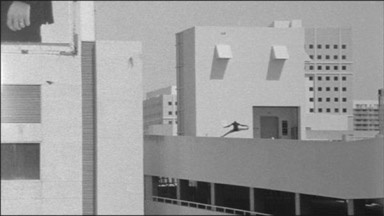
This blurring of other elements with art is reflective of current trends in the global art market, and can be seen particularly well at the Art Video side show held a few blocks away from the main venue at Soundscape Park. A street level perspective of the event space is shown below.
The unique venue of Art Video, highlighted by Friedman's Dancer, is reflective of current trends in the global art market, and may influence future designs of public events and spaces, as well as inspire new means of reaching public audiences in the art market. Bibliography:
|
...