Erica Gilbert-Levin The phenomenon of art theft and its consequences highlights several important issues in our exploration of the art market. It underscores the inexorably interdependent, if often conflicting and complicated relationships among art, economics, politics, law/law enforcement, and international socioeconomic conditions. Many thefts of this kind serve as political statements and are perpetrated in the context of war, disenfranchisement, and international or regional strife. A plundering of art work, such as that perpetrated by the Nazis during World War II, may be intended, in line with all the other actions taken by the Nazis, for example, to obliterate a culture in the eyes of the international community; yet – ironically – art theft often serves to raise the profile of the stolen piece and effectively raises its value on the art market. | Wiki Markup |
|---|
The armed robbery of [Edvard Munch|http://en.wikipedia.org/wiki/Edvard_Munch]'s paintings, including a copy of _[The Scream|http://en.wikipedia.org/wiki/The_Scream]_, from Oslo's [Munch Museum|http://www.munch.museum.no/?lang=en] in 2004, was perpetrated by a group of outlaws from Kosovo who had found themselves "on the downside of the global economy and international social development" (Robertson and Chong, 209). This act may have reflected the thieves socioeconomic plight, an outcry, intentional or otherwise, against their falling status. But the theft was also very likely a "distraction crime," a way to get the Norwegian police to back off in their hunt for the murderer of a police officer a few months prior (Robertson and Chong, 208). The painting was recovered when one of the (convicted) thieves betrayed its whereabouts, likely in exchange for conjugal visits (Robertson and Chong, 209). The fact that the police were "very shy about explaining" why the convict agreed to speak underscores the conflict between the motivations of law enforcement and the values of the art world: "The police tend to be preoccupied with catching crooks, not with recovering stolen art. \[...\] The police fail to see art crime as an Achilles heel for a crook who commits other crimes as well" (Robertson and Chong, 210). !black and white scream.jpeg|border=1!
A black and white version of |
 Image Added Image Added
A black and white version of Munch's _The Scream_ !220px-Edvard_Munch_1921.jpg|border=1!
Edvard Scream 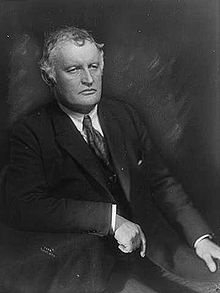 Image Added Image Added
Edvard Munch
| 
