*** This version of Confluence is for testing only and contains a copy of content from June 29th 2026. No changes will be preserved. ***

...
The construction of the parabolic cooker went fairly smoothly due to the careful and lengthy design process. The team began construction on the cooker Nov. 28, 2009 and attached the table top Dec. 8, 2009. Work began on the secondary reflectors first, since they required the most construction time. Side panels for the secondary reflector were cut from ¼" plywood. Next, the fins were cut from ¼" plywood. These fins would attach the sheet metal to the side panels and form the parabolic shape of the secondary reflectors. The fins were designed such that the sheet metal would slide into slots cut into the fins at the top, and strips of ¼" plywood were glued in a straight line along the base of the side panel to hold the bottom of the sheet metal. ½" plywood strips and wood glue were used to attach the fins to the side panels. Pieces of ¼" plywood were glued to the bottom curve of the side panels to fold the parabolic shape of the primary reflector. See figure 1 below for further details. 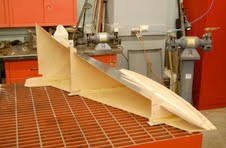
Figure 1 - Construction of Secondary Reflectors The frame of the cooker was built next. This was fairly simple as it was constructed entirely from 2X4 boards, and held together by 2" wood screws. The entire reflector assembly was attached from the side panels of the secondary reflector to the frame by two bolts. The three figures below provide additional details
The frame of the cooker was built next. This was fairly simple as it was constructed entirely from 2X4 boards, and held together by 2" wood screws. The entire reflector assembly was attached from the side panels of the secondary reflector to the frame by two bolts. The three figures below provide additional detail.
Figure 2 - Building the Frame
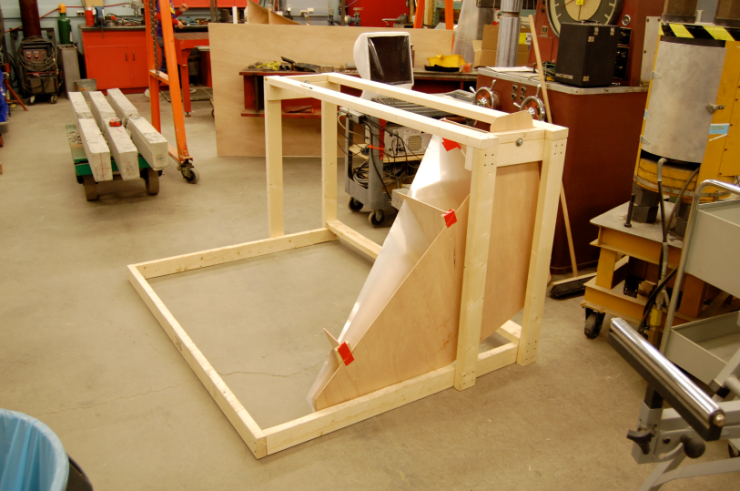
Figure 4 - Attaching a Secondary Reflector to the Frame
Once the secondary reflectors were attached to the frame, the primary reflector was slid into place, and 4 struts were attached underneath the sheet metal reflector, connecting the secondary reflectors together. This completed the reflector assembly, which is able to effectively "swing" from the frame to compensate for the varying solar angles. The struts were attached to the side panels of the secondary reflector using metal L-brackets and 1" wood screws.
The basic cook top was made from ½" plywood. A 10" diameter hole is cut in the middle. A 10" hole was the design specification the team had calculated given the parabolic shapes of the reflectors. The cook top and hole have not yet been insulated to prevent the cook top from burning. See figure 5 below for further detail.
...
The concentrated solar cooker prototype has only recently been completed, so the team is looking forward to testing it as much as possible. Initially, the maximum temperature the cooker is able to reach would like to be known, simply by running tests outside in varying conditions. Also, different reflective materials could be tested, keeping in mind the materials available in Nicaragua. As the design is a prototype, testing would initially be aimed toward finding out if the cooker performs to the standards it was designed for.
There are a number of future modifications possible for the concentrated solar cooker. The reflective surface of the cooker may be increased, or decreased depending on its current power output, as well as different cook top designs could be used. The team has considered a few different cook top designs to hopefully allow the cooker to have more than one cooking area. Also the team has future plans to attach to the cook top something that would effectively control the amount of light coming through the hole, and thus control the temperature. Portability and durability are other areas the team would like to improve on the cooker.
Critical Theory Issues and Challenges
With the development of this concentrated solar cooker, the experience of frying a tortilla would completely change. Currently, the women of Nicaragua use a wood burning stove to heat an aluminum frying pan early in the morning. The tortillas are all cooked before the children are sent to school and the men of the household leave for work. The sun may not be strong enough early in the morning to actually fry the tortillas effectively, so the women would have to adjust their daily schedule to accommodate for this difference.
Cooking with the team's design would require a basic knowledge of solar insolation and how it changes through the course of the day. The swing would have to be adjusted approximately every fifteen minutes to focus the sun onto the cook top. Moreover, the cooker is obviously more effective when the sun is the strongest, and on days when the sun is in the sky for the longest. Therefore on longer summer days, it may be possible to cook for eight hours, whereas on the shortest winter days, the cooker may only be effective for two hours. Additionally, safety must be addressed. It is important to instruct users on the proper procedure of frying with the cooker. For example, a pot must be in place on the tabletop or the shutter must be closed when focusing the parabolic swing in order to prevent retinal damage. Looking directly at the focus is damaging to the eye. To bridge this knowledge gap the subgroup would like to provide a brief Spanish language manual, and provide a tutorial for cooker usage and safety upon arrival in Nicaragua during spring break.