*** This version of Confluence is for testing only and contains a copy of content from June 29th 2026. No changes will be preserved. ***

...
Figure 5--The difference in temperature reached after 60 minutes of cooking during the parallel heating tests.
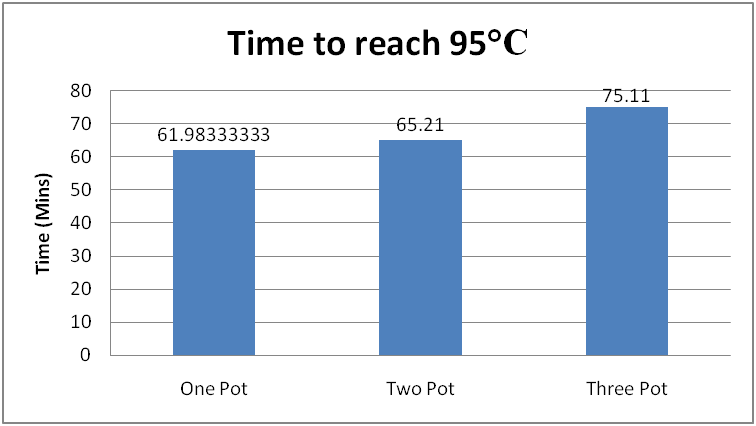
Another comparison we implemented was the difference in time it took each pot to reach 95°Celsius (figure 6). Again, it is clear to see that the difference between 1 pot and 2 pots is relatively small, and then there is a jump between 2 and 3 pots. Also, the data collected for the 4 pot test, on average, never reached 95 degrees Celsius.
Wiki Markup
An important note is that the temperature in 3 out of 4 of the pots for the 4 pot test reached 95 degrees. After 80.6 minutes, 3 pots were at 95 degrees or hotter. However, there was one pot that remained below 75 degrees for the entire testing period. Using the data from this pot in the average for the 4 pot test drastically reduced the average temperature for the test. It is tempting to blame the low temperatures on a misreading of the thermocouple or a mistake in the set-up of the system. However, we determined that the thermocouple was not broken or msitaken but rather that the temperature in the pot must have actually been less than the temperature in the other 3.
This led us to re-examine the set up of the solar cooker. The pot in question was located at the front left-hand-side of the cooker as shown in figure 7 below. Consulting our lighting set up, we noted that there are several lights that are burnt out on the left side of the cooker. We also noted that this particular pot was near the door and the door eventually had to be fixed due to bowing of the wood. Both of these issues could have influenced the lower temperature of the water in the front, left pot.
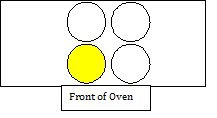
Figure 7. Visual depiction of weaker lighting zone
...
Figure 8 - Comparison of performance for the solar oven before and after the addition of the wood door seal.
The time it took the oven to reach 95⁰C decreased from 61.1 minutes for the old door to 59.4 minutes for the new door for an overall difference of 2.6% (figure 9). After 60 minutes, the solar oven with the new door was 2.8% hotter compared to the old door.
The Solar Oven Group concluded that the performance improvement of the oven with the new door was small enough that the data collected for the 2 pot-3lbs, 3 pot-3lbs, and 4 pot-3lbs tests was accurate enough for the purposes of the group's analysis.
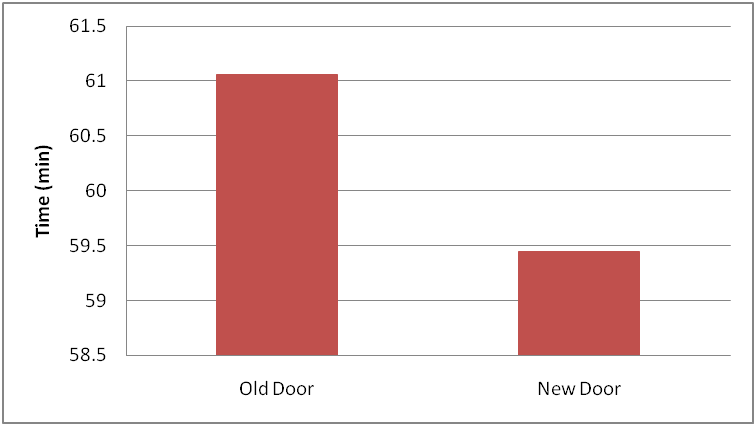
Figure 9 - Comparison of times required for solar oven to reach 95⁰C before and after the addition of the wood door seal.
...