*** This version of Confluence is for testing only and contains a copy of content from June 29th 2026. No changes will be preserved. ***

...
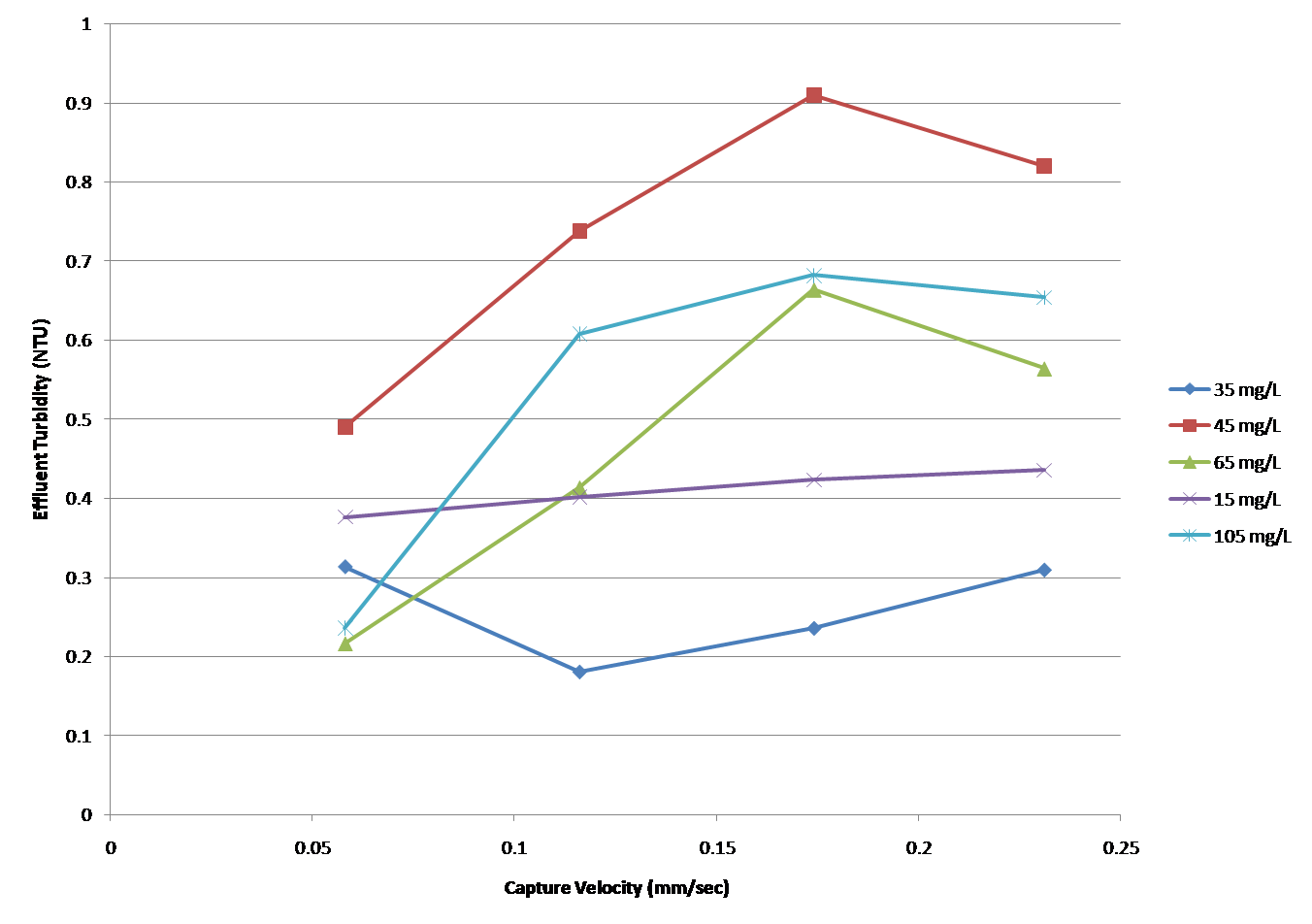
Figure 1: Capture Velocity vs. Average Effluent Turbidity shown for each alum dose at low floc blanket level.
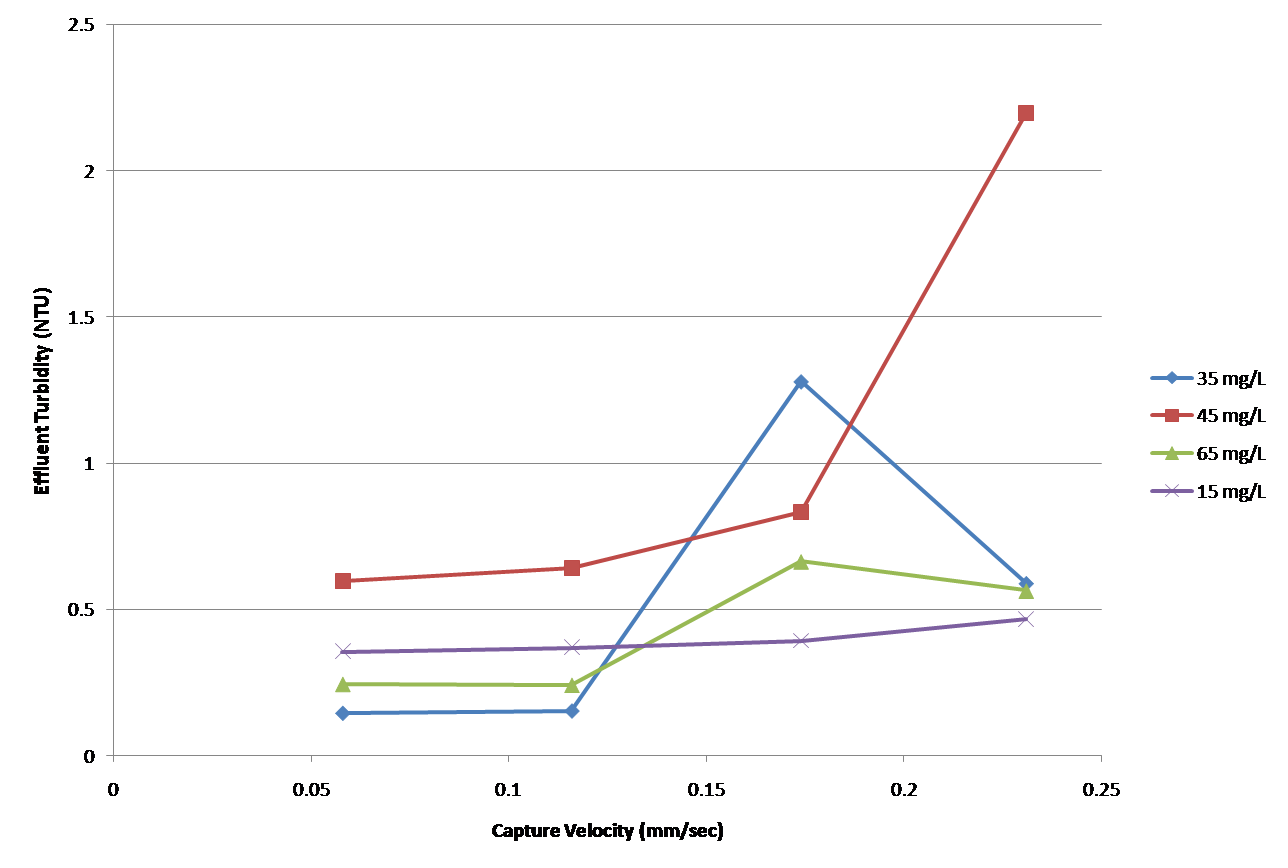
Figure 2: Capture Velocity vs. Average Effluent Turbidity shown for each alum dosage at high floc blanket level.
Overall, this system performed well and most of the effluent turbidities were below 1 NTU. The thesis on evaluation on parameters affecting steady-state performance of a floc blanket found that the ideal dosage was 45 mg/L for 100 NTU influent water. The alum doses of 35 mg/L and 65 mg/L performed best. Because the slight underdose and overdose peformed well (average effluent turbidities were under 1 NTU), what was thought to be extreme under and over doses were also tested. We tested 15 mg/L and 105 mg/L to observe how the floc blanket formed under severe non-ideal conditions. The dose of 105 mg/L, despite averaging at less than 1 NTU, resulted in failure since the average effluent turbidity frequently spiked above 1 NTU. The 15 mg/L dose, however, had average effluent turbidity of less than 1 NTU, meaning that cannot be considered a failure.
Originally, an alum dose of 45 mg/L was thought to be an ideal dose, meaning that it was supposed to produce the lowest effluent turbidity. However, this alum dose did not perform as well as was expected. In comparison to the other average effluent turbidities, 45 mg/L should either perform slightly better than an alum dose of 35 mg/L or somewhere between 35 mg/L and 65 mg/L. As shown in the above graphs, 45 mg/L performs worse than all of the other alum doses, including what was supposed to be extreme under and over doses (15 mg/L and 105 mg/L). This should not have happened; possible reasons for these results include air bubbles in the tube settler
and the fact that the 45 mg/L experiments were run with an old apparatus with a flow accumulator. Experiments at this alum dose should be re-run.
The system will fail in different ways based upon the alum dose. The major cause of failure for an underdose is an incomplete floc blanket as a result of smaller flocs that are formed, but the increased residence time in the flocculator creates larger flocs, which form a floc blanket more quickly and more effectively. Thus, although we expected that the extreme underdose of 15 mg/L would fail. However, the effluent turbidity fell within the acceptable range, which demonstrates success. This is because in our system, the increased residence time in the flocculator creates larger flocs, which form a floc blanket more quickly and more effectively.
(This paragraph needs to be rewritten. I agree with what you say about the flocculator, but you need to differentiate between underdosing and floc blanket failure. The floc blanket clearly formed and gave performance under 1 NTU, so this was not failure. This was worsened performance compared to a dose of 35 mg/L. Include reasons for why this would be the case.)
...