*** This version of Confluence is for testing only and contains a copy of content from June 29th 2026. No changes will be preserved. ***

...
Using the Spring 2009 team's process controller methods, we subjected an ideal geometry to non-ideal conditions. Though the Spring 2009 team had success with a 9.5 mm diameter tube, due to a change in influent water chemistry over the summer, (ineffective air bubble traps in the flocculator,) or the addition of a flow accumulator to the method, we experienced failure with this geometry. We achieved an acceptable effluent turbidity (less than 1 NTU) with a 15.1 mm diameter tube that had a length of 30.5 mm. With the ideal results, we then subjected this tube settler to varying alum dosage to investigate the dependency of the performance of the tube settler on this parameter. At each alum dosage, the tube settler was tested at a variety of capture velocities and at two different floc blanket levels.
...
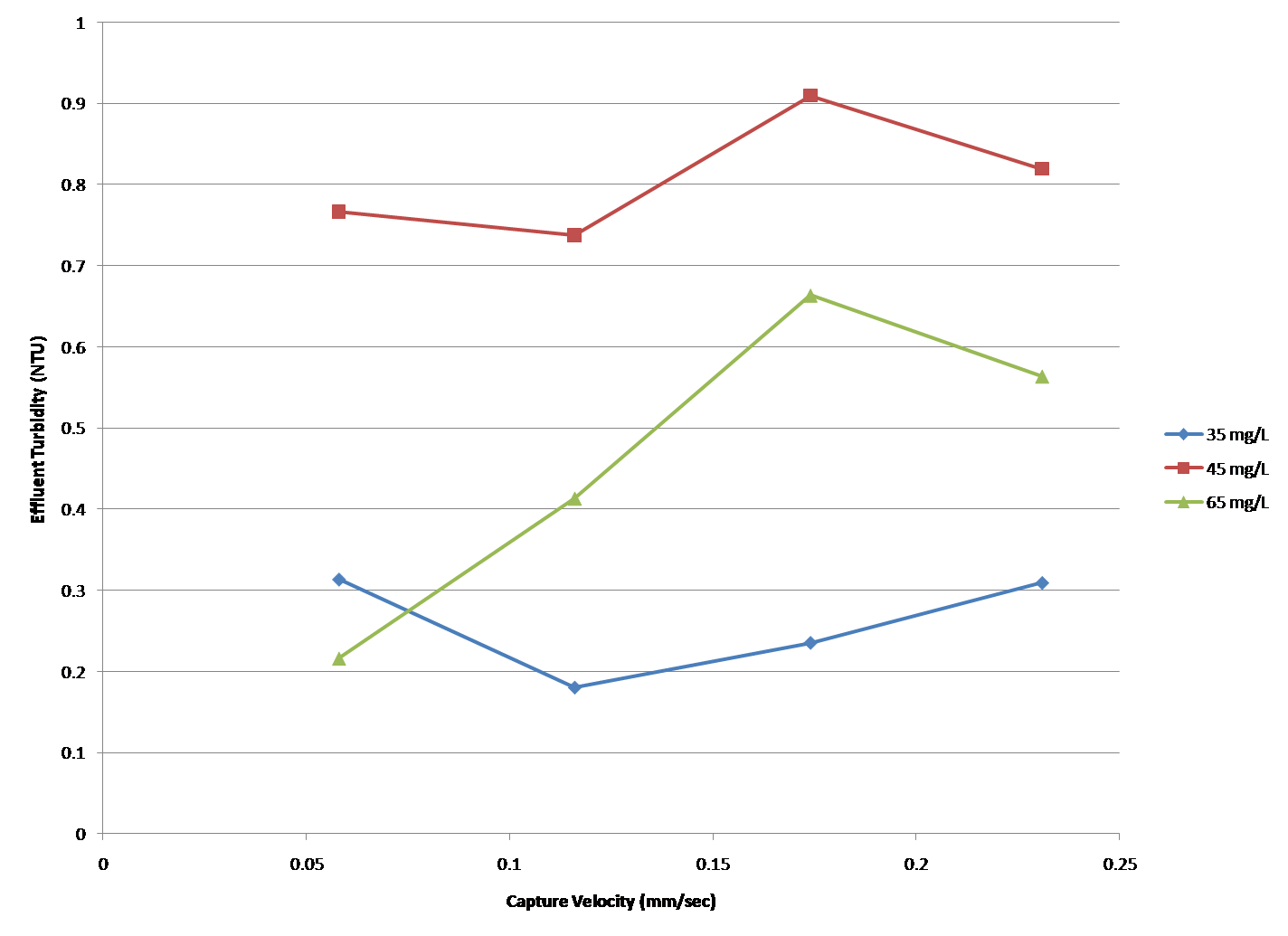
Figure 1: Capture Velocity vs. Average Effluent Turbidity shown for each alum dose at low floc blanket level.
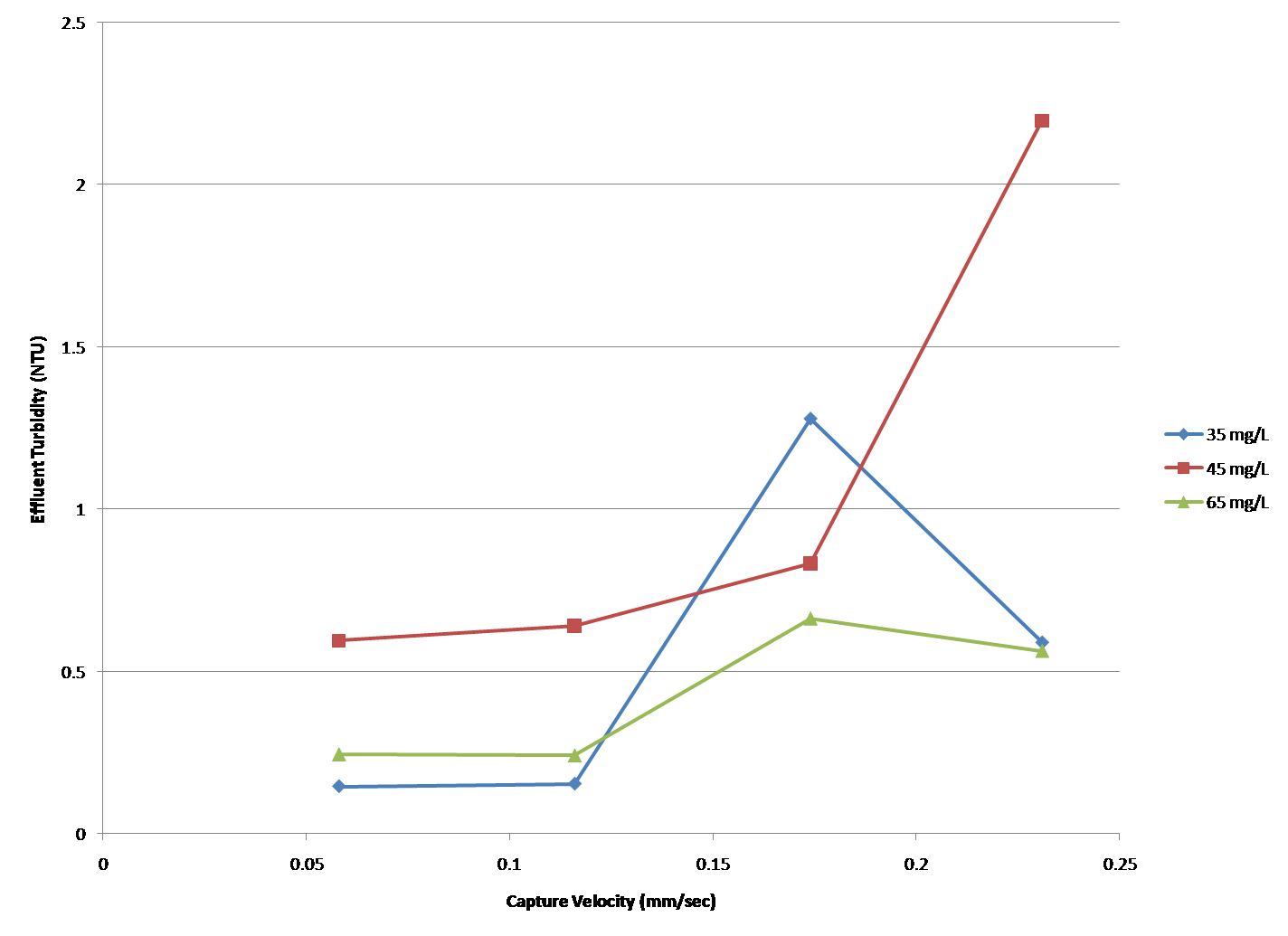
Figure 2: Capture Velocity vs. Average Effluent Turbidity shown for each alum dosage at high floc blanket level.
|| Floc Blanket Height
...
|| Alum Dose (mg/L)
...
|| 5 m/day
...
|| 10 m/day
...
|| 15 m/day
...
|| 20 m/day ||
Low | 35 | .3136 | .1799 | .2353 | .3093 |
High | 35 | .1457 | .1535 | 1.278 | .5889 |
Low | 45 | .7667 | .7374 | .9094 | .8192 |
High | 45 | .5946 | .6407 | .8321 | .5638 |
Low | 65 | .2155 | .4129 | .6635 | .5637 |
High | 65 | .2446 | .2414 | .6634 | .5637 |
...