*** This version of Confluence is for testing only and contains a copy of content from June 29th 2026. No changes will be preserved. ***

...
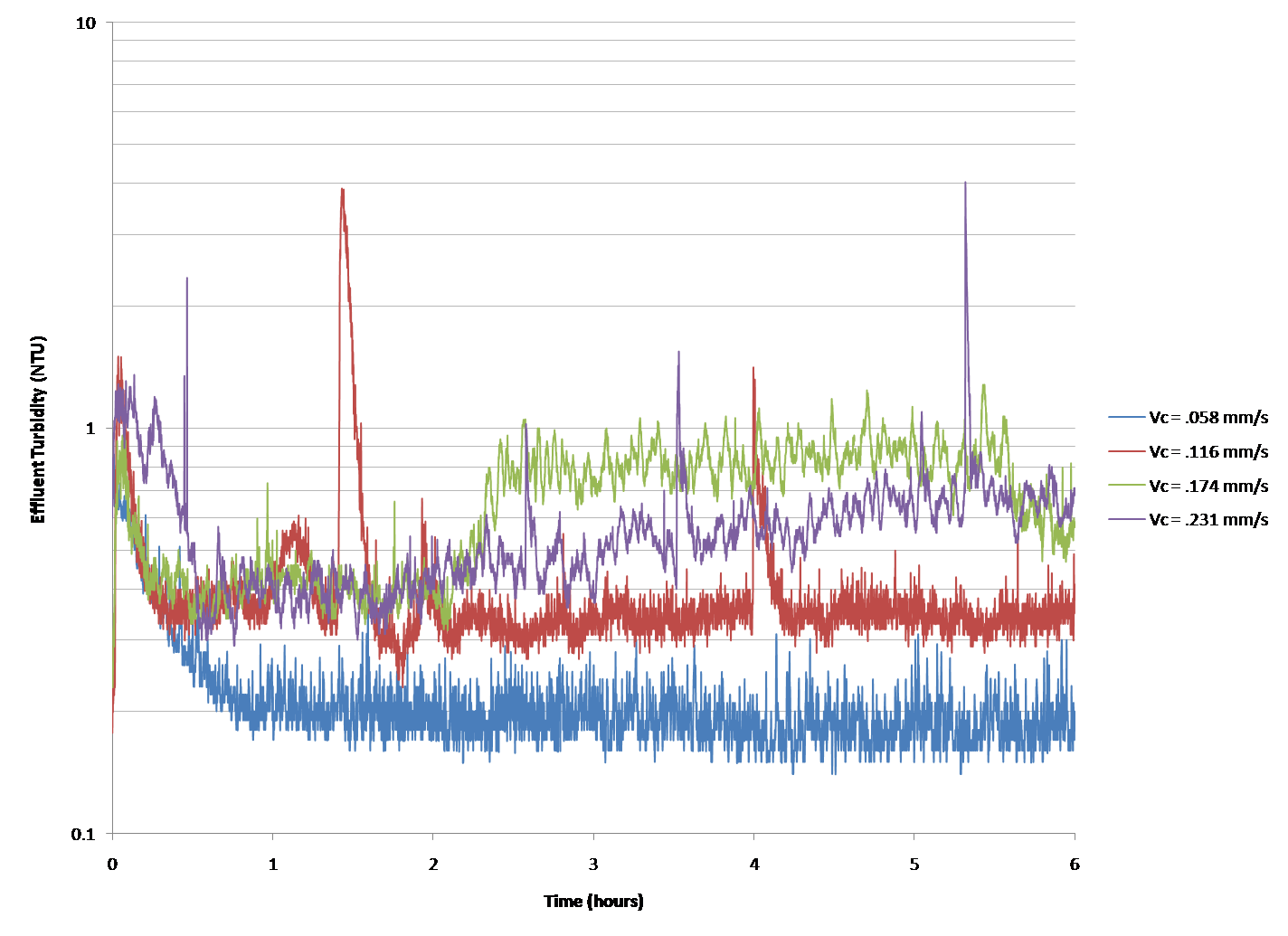
Figure 1: Effluent Turbidity vs. Time, Floc Blanket on Low, Alum dose = 65 mg/L
Figure 2: Effluent Turbidity vs. Time, Flock Blanket on High, Alum dose = 65 mg/L
The higher alum dose yielded a higher average turbidity for all capture velocities. At 5 and 10 m/day the effluent turbidity was under 1 NTU, however at 15 and 20 m/day the average effluent turbidity was higher and above 1 NTU. It was expected that higher capture velocities would yield a higher effluent turbidity.For the Floc Blanket at both the lower and higher levels, the capture velocity of .057 mm/s produces a lower effluent turbidity than the Vc = .116 mm/s, and Vc = .174 produces a higher effluent turbidity than Vc = .116 mm/s, which is expected. However, Vc = .231 mm/s produces a lower effluent turbidity than Vc = .174 mm/s. This is possibly because of particles rolling up the tube settler... FIX